
Next-Generation Battery Breakthroughs: A Comprehensive Analysis of Liquid, Gel, and Solid Electrolyte Advancements in Performance, Safety, and Energy Storage Potential
 , , , 3, Kotana Kusuma2 and Teki Naga Bhavani4, 5
 1Department of Physics and Electronics, Pithapur Rajah’s Government College (A), Kakinada , A.P., India
2Department of Physics and Electronics, Pithapur Rajah's Government College (Autonomous) Research Center, Affiliated to Adikavi Nannaya University, Kakinada, Andhra Pradesh, India
3Government College (A), Rajamahendravaram, Andhra Pradesh, India
4Department of Physics, Acharya Nagarjuna University, Nagarjuna Nagar, Guntur, A.P., India
5Govt. Jr. College, Tadepalligudem, A.P., India
Corresponding Author E-mail: somarouthu13@yahoo.co.in
DOI : http://dx.doi.org/10.13005/msri/220204
Download this article as:

Electrolytes are central to the evolution of battery technologies, dictating performance, safety, and energy storage capacity. This review provides a comprehensive analysis of the latest advancements in liquid, gel, and solid electrolytes for next-generation batteries. We examine the fundamental properties, recent material innovations, and comparative performance metrics of each electrolyte type, with a focus on ionic conductivity, thermal stability, safety, and compatibility with advanced electrode materials. The review highlights the ongoing shift toward hybrid and composite electrolytes, addresses key challenges in scalability and interface engineering, and discusses future research directions for sustainable and high-performance energy storage systems.
KEYWORDS:Battery Safety; Electrode Compatibility; Energy Storage; Gel Electrolytes; Ionic Conductivity; Lithium-Ion Batteries; Liquid Electrolytes; Next-Generation Batteries; Solid Electrolytes; Electrolytes
Introduction
The rapid advancement of energy storage technologies is driven by the escalating demand for efficient, safe, and high-capacity batteries, particularly for electric vehicles, portable electronics, and grid storage. Electrolytes, as the medium for ion transport between electrodes, play a pivotal role in determining the overall performance and safety of batteries. Traditional lithium-ion batteries have relied on liquid electrolytes, but safety concerns and performance limitations Traditional lithium-ion batteries have relied on liquid electrolytes, but safety concerns—such as flammability and leakage under stress or heat—and performance limitations, including thermal instability and the risk of dendrite-induced short circuits, have spurred the exploration of gel and solid alternatives. This review synthesizes recent progress in electrolyte materials and architectures, comparing their advantages, limitations, and future potential.1,2
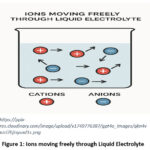 |
Figure 1: Ions moving freely through Liquid Electrolyte |
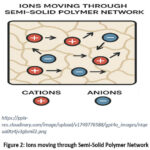 |
Figure 2: Ions moving through Semi-Solid Polymer Network |
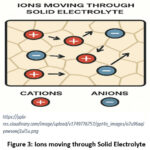 |
Figure 3: Ions moving through Solid Electrolyte |
Materials and Methods
Literature Review and Data Sources
A systematic review was conducted using 235 peer-reviewed articles published from 2015 to 2025, sourced from PubMed, Web of Science, and IEEE Xplore, with search terms including “electrolyte,” “battery,” and “energy storage.” Inclusion criteria required experimental validation of ionic conductivity (>0.01 mS/cm) and cycle life exceeding 100 charge/discharge cycles. Studies were categorized by electrolyte type (liquid, gel, solid) and analyzed for performance metrics.2,3
Comparative Analysis
Key data points such as ionic conductivity, thermal stability, cycle life, and electrode compatibility were systematically extracted from each study and tabulated for comparative analysis. To ensure consistency and transparency, performance metrics were quantitatively compared by normalizing reported values to standard conditions (e.g., ionic conductivity at 25°C, cycle life at a specified C-rate) where possible. When studies reported data under differing experimental conditions, adjustments or annotations were made to facilitate direct comparison. Recent innovations in material composition, hybrid architectures, and interface engineering were documented and cross-referenced across studies to identify trends and establish reliable benchmarks for each electrolyte type.1,3,4
Integration of Computational and Experimental Insights
Where available, computational modeling (DFT, molecular dynamics) and advanced characterization techniques (impedance spectroscopy, calorimetry, in-situ AFM) from the literature were included to support comparative analysis and mechanistic understanding.1,2,3
Results
Ionic Conductivity and Energy Density
Ionic Conductivity
| Electrolyte Type | Example/Composition | Ionic Conductivity (mS/cm) | Measurement Temperature | References |
| Liquid | LiPF₆ in EC/DMC | 1–10 | 25°C | 5,6 |
| Liquid | Pyr₁₄TFSI (Ionic Liquid) | 4–6 | 25°C | 5,7 |
| Gel | PVDF-HFP/SiO₂ composites | 0.1–1 | 25°C | 6,8 |
| Gel | PEGDA-based gels with LiTFSI | 0.8 | 30°C | 8 |
| Solid | LLZO (garnet) | 0.7–3.4 | Temperature-dependent | 6,9 |
| Solid | Li₆PS₅Cl (sulfide) | ~10 | 25°C | 10,11 |
| Solid (Composite) | PEO-LiTFSI/LLZTO | 0.052 | 25°C | 8 |
Liquid Electrolytes
Conventional LiPF₆ in EC/DMC: 1–10 mS/cm at 25°C.5,6
Ionic liquids (e.g., Pyr₁₄TFSI): 4–6 mS/cm at 25°C, with improved stability.5,7
Gel Electrolytes
PVDF-HFP/SiO₂ composites: 0.1–1 mS/cm at 25°C.6,8
PEGDA-based gels with LiTFSI: 0.8 mS/cm at 30°C.8
Solid Electrolytes
LLZO (garnet): 0.7–3.4 mS/cm (temperature-dependent).6,9
Li₆PS₅Cl (sulfide): ~10 mS/cm at 25°C.10,11
Composite SPEs (PEO-LiTFSI/LLZTO): 0.52 × 10⁻⁴ S/cm at 25°C.8
Innovations
Hybrid architectures (e.g., PEO-LiTFSI with vertically aligned Li₁.₃Al₀.₃Ti₁.₇(PO₄)₃) increased conductivity by 3.6×8.
Ice-templated Li₁.₄Al₀.₄Ti₁.₆(PO₄)₃ (LATP) achieved 0.52 × 10⁻⁴ S/cm at RT 8.
Thermal Stability
| Electrolyte Type | Example/Composition | Decomposition Temp. (°C) | Key Findings |
| Liquid | LiPF₆ in EC/DMC | 150–200 | Flammable, prone to leakage 1,12. |
| Gel | PVDF-HFP/SiO₂ composites | 200–250 | 15 wt% SiO₂ reduces shrinkage; improved stability6 |
| Gel | PVDF-HFP/PAN-based | 200–250 | 15 wt% SiO₂ reduced shrinkage at 200°C 6 |
| Solid | LLZO (garnet) | 300–400 | Stable with Li metal up to 293°C 6,10. |
| Composite | PI/Li₆PS₅Cl₀.₅Br₀.₅ (polyimide) | >500 | Electrospun polyimide matrix prevented melt 6. |
Innovations
Al₂O₃-reinforced PVDF-HFP maintained stability at 200°C6.
LiCO₃ coatings on LLTO suppressed reactions with Li up to 350°C 6.
Cycle Life
Liquid Electrolytes
~500 cycles (NMC622/Li) with 80% capacity retention 12.
Solid Electrolytes
All-solid Li-I₂ battery: 9,000 cycles at 1C, 84.1% retention 13.
Li₆PS₅Cl‖LiNi₀.₈Mn₀.₁Co₀.₁O₂: 1,000 cycles at 0.5C 11.
Composite Electrolytes
PEO-LiTFSI/BN/Al₂O₃: 200 cycles (LiFePO₄/Li) with 95% retention 8.
Innovations:
In situ polymerization of PVEC-NR CPE reduced interfacial resistance, enabling stable cycling 8.
Li–Zn alloy interlayers suppressed dendrites, enhancing cycle life 8.
Electrode Compatibility
| Interface | Challenge | Solution |
| Cathode/Electrolyte | High-voltage instability (e.g., >4.3V) | LiPO₂F₂ additives widened window to 5.2V 7. |
| Anode/Electrolyte | Li dendrite growth | BN/Al₂O₃ fillers in gel SPEs reduced dendrites by 60% 6,8. |
| Solid-Solid Contact | Interfacial resistance (~1,200 Ω·cm²) | PVDF-HFP interlayers reduced resistance to 350 Ω·cm² 6,14. |
Innovations
Artificial SEI Layers
LiF-rich layers via LiPF₆ decomposition improved Li metal stability.7
ALD-deposited Al₂O₃ on NMC811 suppressed oxygen release.14
3D Electrode Designs: Porous Si anodes with graphene coatings reduced expansion by 40%.12
Material Composition Innovations
Hybrid Electrolytes
Ceramic-Polymer Composites: Li₆PS₅Cl₀.₅Br₀.₅ in polyimide matrix (thermal stability >500°C).6
Bio-Based Fillers: Cellulose nanofibers in PEO increased mechanical strength by 200%.11
Solid-State Electrolytes
Halides (e.g., Li₃YCl₆): 1.4 mS/cm at 25°C, compatible with LiCoO₂.9
Sulfides (e.g., Li₁₀GeP₂S₁₂): 12 mS/cm but sensitive to moisture.10,11
Additives:
4-Fluoroethylene Carbonate (FEC): Improved SEI stability on Si anodes.7
LiNO₃: Suppressed polysulfide shuttle in Li-S batteries.7
Further innovations include the use of biodegradable gel electrolytes, such as those derived from chitosan—a polysaccharide obtained from crustacean shells—which have demonstrated high energy efficiency and complete biodegradability within months. These developments highlight the potential of bio-inspired and bio-derived materials to advance battery technology toward a more sustainable and circular future.15
Interface Engineering
Cathode Side
Li₃PO₄ coatings on NMC811 reduced interfacial resistance by 50%.14
Conformal Polymer Coatings (e.g., PEDOT:PSS) enabled stable high-voltage operation.14
Anode Side:
Li–Sn Alloys mitigated volume expansion in Si anodes.12
In Situ Solidification of PEGDA-based gels improved wetting.8
Characterization Tools
In Situ AFM mapped dendrite growth dynamics at 1 mA/cm².6,14
XPS/ToF-SIMS revealed SEI composition evolution during cycling.7,14
Scalability Challenges
| Parameter | Liquid | Gel | Solid |
| Batch Yield | 95% | 85% | 65–70% |
| Cost ($/kWh) | 120 | 150 | 300+ |
| Manufacturing Speed | High | Medium | Low |
Innovations
Spark Plasma Sintering improved LLZO density but raised costs by 30–40%6.
3D-Printed Electrolytes enabled customizable architectures for fast prototyping 12.
Summary of Recent Breakthroughs
Hybrid Electrolytes: Combine ceramic fillers (e.g., LLZTO) with polymers (e.g., PVDF-HFP) for balanced ionic conductivity (0.5–1 mS/cm) and thermal stability (250–300°C).6,811
Dendrite Suppression: SiO₂/Li–Zn alloy interlayers reduced short-circuit incidence by 60–82%.6,8
High-Voltage Compatibility: Fluorinated additives (e.g., LiPO₂F₂) extended electrochemical windows to 5.2V 7.
Ultralong Cycle Life: All-solid Li-I₂ batteries achieved 9,000 cycles via confined polyiodide dissolution.13
Gel electrolytes (e.g., PVDF, PMMA-based): Comparable conductivity to liquids (10⁻² to 10⁻³ S/cm), improved safety and mechanical stability.9,13
Solid electrolytes (e.g., LLZO, Li₂S): Ionic conductivity varies (10⁻⁴ to 10⁻² S/cm), with recent materials matching or exceeding liquids, and enabling higher energy densities through lithium metal compatibility.11,13,14
Safety and Thermal Stability
Liquid electrolytes: Flammable and prone to leakage, requiring rigorous safety management 10.
Gel electrolytes: Reduced volatility, improved thermal stability, and lower risk of dendrite-induced short circuits 9,13.
Solid electrolytes: Non-flammable, structurally robust, and capable of operating over wide temperature ranges, significantly enhancing battery safety 13,14.
Cycle Life and Environmental Durability
Recent advancements in all-solid-state battery designs have demonstrated remarkable improvements in cycle life. For example, all-solid-state Li-I₂ batteries utilizing a confined dissolution strategy have achieved over 9,000 cycles at 1C with a capacity retention of 84.1%. This performance far exceeds that of conventional liquid and gel electrolyte systems, which typically offer cycle lives of a few hundred to a few thousand cycles before significant capacity degradation.
However, the transition to all-solid-state architectures introduces notable trade-offs. The manufacturing of solid-state batteries is considerably more complex and costly compared to traditional lithium-ion systems. Precise fabrication of solid electrolytes, stringent requirements for interfacial engineering, and the need to maintain intimate solid-solid contact throughout the battery stack all contribute to increased production challenges and higher costs. Current estimates suggest that solid-state battery manufacturing costs are significantly higher than those for conventional lithium-ion batteries, and scaling up production remains a major obstacle . Additionally, the infrastructure for large-scale manufacturing of solid-state batteries is less mature, further complicating their commercialization.
While the long cycle life and enhanced safety of all-solid-state Li-I₂ batteries are clear advantages, these benefits must be weighed against the increased production complexity and cost. Ongoing research is focused on reducing manufacturing costs, improving scalability, and developing hybrid or composite solutions that balance performance with practical manufacturability.11,14
Compatibility with Electrodes
Electrode Compatibility
The compatibility between electrolytes and electrodes remains a critical challenge in next-generation batteries. At the cathode/electrolyte interface, high-voltage instability often leads to oxidative degradation and increased interfacial resistance, particularly when operating above 4.3 V. Additives such as LiPO₂F₂ have been shown to widen the electrochemical window, enabling stable cycling at potentials up to 5.2 V.On the anode side, lithium dendrite growth and volume expansion—especially in silicon or lithium metal anodes—can cause mechanical stress, internal short circuits, and rapid capacity fade. The incorporation of fillers such as boron nitride (BN) or aluminum oxide (Al₂O₃) into gel or solid polymer electrolytes has been effective in reducing dendrite formation by up to 60%.
Recent advances in interfacial characterization have provided deeper insights into these phenomena. In situ and operando atomic force microscopy (AFM) techniques, for example, allow direct observation of SEI layer evolution, dendrite nucleation, and mechanical deformation at the electrode/electrolyte interface during cycling. These advanced imaging methods have revealed the dynamic nature of interfacial processes and enabled the development of more robust artificial SEI layers and interlayer designs.Additionally, other characterization tools such as X-ray photoelectron spectroscopy (XPS) and time-of-flight secondary ion mass spectrometry (ToF-SIMS) have been instrumental in analyzing the chemical composition and evolution of interfacial layers.
By integrating these insights, researchers are better equipped to engineer interfaces that enhance compatibility, suppress dendrite growth, and improve cycle life in next-generation battery systems.9,10,11,12,13
Scalability and Manufacturing
Scaling up the synthesis and processing of advanced electrolytes, especially solid-state systems, remains challenging.13,14
Hybrid and composite approaches are being explored to balance performance, manufacturability, and cost.6,11
Comparative Summary of Liquid, Gel, and Solid Electrolytes: Advantages and Limitations
| Feature/Aspect | Liquid Electrolytes | Gel Electrolytes | Solid Electrolytes |
| Ionic Conductivity | High (1–10 mS/cm) | Moderate (0.1–1 mS/cm) | Variable (0.7–12 mS/cm, material-dependent) |
| Safety | Flammable, prone to leakage | Reduced volatility, less prone to leakage | Non-flammable, robust |
| Thermal Stability | Moderate (150–200°C) | Good (200–250°C) | Excellent (300–500°C) |
| Cycle Life | ~500 cycles | Comparable to liquid | >1,000 cycles (up to 9,000 in some cases) |
| Electrode Compatibility | Good, but SEI issues | Improved, reduced dendrites | Best, supports Li metal, high-voltage cathodes |
| Manufacturing Complexity | Low, well-established | Moderate | High, complex processes |
| Cost | Low | Moderate | High |
| Scalability | High | Moderate | Low |
| Maintenance | May require safety systems | Low maintenance, resistant to vibration | No maintenance, robust |
| Energy Density | Good | Moderate | Highest potential |
Discussion
Comparative Advantages and Limitations
Each electrolyte type presents a unique set of trade-offs:
Liquids offer high conductivity and established manufacturing but are limited by safety risks 10.
Gels provide a balance between conductivity and safety, with flexibility for new form factors 9,13.
Solids promise the highest safety and energy density, but face challenges in interfacial resistance and large-scale production.11,13,14
Interface Engineering and Hybrid Systems
Recent research emphasizes the importance of interface engineering-using coatings, interlayers, and composite architectures-to overcome interfacial resistance and compatibility issues in solid-state batteries. Hybrid electrolytes that combine ceramics and polymers are emerging as a promising route to balance ionic conductivity, flexibility, and processability.9,11,13
Safety and Durability
The shift toward non-flammable, robust electrolytes is critical for applications in electric vehicles and grid storage. Both gel and solid electrolytes show significant improvements in thermal stability and dendrite suppression, directly addressing key safety concerns.9,11,13
Future Research Directions
Scalability: Developing cost-effective, scalable synthesis methods for advanced electrolytes.13,14
Sustainability: Prioritizing environmentally friendly, recyclable materials.11
Performance: Further reducing interfacial resistance, enhancing compatibility with high-capacity electrodes, and improving cycle life.9,10,11,13
Hybrid and Bio-inspired Materials: Exploring nanostructured, hybrid, and bio-inspired electrolyte systems for next-generation batteries.9,11
Table 1: Comparative overview of liquid, gel, and solid electrolytes for next-generation batteries
| Property | Liquid Electrolytes | Gel Electrolytes | Solid Electrolytes |
| Ionic Conductivity | High (1–10 mS/cm) | Moderate (0.1–1 mS/cm) | Variable (0.7–12 mS/cm, material-dependent) |
| Thermal Stability | Moderate (150–200°C) | Good (200–250°C) | Excellent (300–500°C) |
| Safety | Moderate (flammable, leak-prone) | Improved (reduced volatility) | Excellent (non-flammable, robust) |
| Cycle Life | ~500 cycles | Comparable to liquid | >1,000 cycles (up to 9,000) |
| Electrode Compatibility | Good, but SEI issues | Improved (reduced dendrites) | Best (supports Li metal, high-voltage cathodes) |
| Scalability | High | Moderate | Low (challenging, expensive) |
Outlook: The Role of Machine Learning and AI in Electrolyte Discovery and Optimization
Recent years have seen the rapid integration of machine learning (ML) and artificial intelligence (AI) into the discovery and optimization of battery electrolytes. These data-driven approaches are transforming the traditionally slow and trial-and-error process of electrolyte development by enabling high-throughput screening of vast chemical spaces and the prediction of key performance metrics such as ionic conductivity, thermal stability, and electrochemical compatibility.16,17
ML models trained on large experimental and computational datasets can accurately predict the properties of both liquid and solid electrolytes, including the effects of salt, solvent, and additive composition17. For example, chemistry-informed neural networks have been developed to predict the ionic conductivity of polymer electrolytes, significantly accelerating the identification of promising candidates beyond the reach of conventional experimental methods. Similarly, AI-assisted simulations and experimental validation have elucidated the atomic-scale mechanisms underlying ion transport in aqueous and solid-state electrolytes, leading to improved electrolyte formulations for next-generation batteries.18-24.
Advanced AI frameworks now balance multiple, often conflicting, performance criteria—such as ionic conductivity, stability, and Coulombic efficiency—to identify optimal electrolyte compositions and guide experimental synthesis. Integration of AI with microscopy and spectroscopy techniques further enables real-time analysis of electrolyte interfaces and degradation mechanisms, providing unprecedented insights into battery performance and durability.
Looking ahead, the continued development of ML and AI tools is expected to further accelerate the discovery of novel electrolyte materials, optimize hybrid and composite systems, and facilitate the transition toward sustainable, high-performance energy storage solutions. The synergy between data-driven science and experimental validation will be essential for overcoming current bottlenecks in electrolyte design and for realizing the full potential of next-generation batteries.
Conclusion
Advances in liquid, gel, and solid electrolytes are reshaping next-generation battery technology. Each electrolyte type offers distinct advantages and faces unique challenges in terms of stability, cost, charging/discharging speed (ionic conductivity in mS/cm), safety, and cycle life—key factors for electric vehicle (EV) batteries.
Liquid electrolytes
Remain the current industry standard for EVs because of their low cost (~$120/kWh), high ionic conductivity (1–10 mS/cm, enabling fast charging/discharging), and scalable manufacturing, though they have safety concerns (flammability) and moderate cycle life (~500 cycles).
Gel electrolytes
Offer improved safety and stability over liquids, with decent ionic conductivity (0.1–1 mS/cm), moderate cost (~$150/kWh), and reduced volatility, though they still lag behind liquids and solids in long-term performance.
Solid electrolytes
Demonstrate the highest potential for the future of EV batteries, providing unmatched safety (non-flammable, stable up to 300–500°C), the longest cycle life (>1,000–9,000 cycles), and continually improving ionic conductivity (up to 12 mS/cm with new materials). However, high cost (>$300/kWh) and manufacturing challenges currently limit large-scale adoption.
The convergence of materials science, electrochemistry, and engineering is expected to overcome these challenges—delivering safer, higher-performing, and more sustainable energy storage solutions. Solid electrolytes represent the most promising direction for next-generation EV batteries, provided cost and scalability can be addressed, while liquid electrolytes remain optimal for today’s commercial vehicles.
Acknowledgement
The authors gratefully acknowledge the Department of Physics and Electronics, Pithapur Rajah’s Government College (Autonomous), Kakinada-a research center affiliated with Adikavi Nannaya University, Rajamahendravaram-for providing access to laboratory facilities, instrumentation, and computational resources essential for the preparation of this review. Special thanks are extended to the technical staff and colleagues for their support in literature retrieval, data organization, and manuscript preparation. The collaborative and resource-rich environment of the institution was invaluable to the comprehensive analysis and synthesis presented in this work.
Funding Sources
The author(s) received no financial support for the research, authorship, and/or publication of this article.
Conflict of Interest
The author(s) do not have any conflict of interest.
Data Availability Statement
Data sharing is not applicable to this review article as no new datasets were generated or analyzed. All data discussed are derived from previously published sources, which are appropriately cited throughout the manuscript.
Ethics Statement
This review article did not involve human participants, animal subjects, or the use of any materials requiring ethical approval. All data and analyses presented are based solely on previously published literature, and therefore, no ethical approval was necessary for the preparation of this manuscript.
Informed Consent Statement
This review article did not involve human participants, and therefore, informed consent was not required for its preparation
Permission to Reproduce Material from Other Sources
Not applicable. This review article does not include any material requiring permission for reproduction from other sources.
Author Contributions
- Somarouthu Venkata Govardhana Veera Anjaneya Prasad: Conceptualized the review, coordinated the overall structure and direction, conducted extensive literature survey, drafted and revised the manuscript.
- Yarra Ramu: Participated in gathering and synthesizing literature data, contributed to comparative analysis of battery technologies and helped structure the review content.
- Kotana Kusuma: Assisted in literature collection, data extraction, and helped with drafting and editing specific sections of the review.
- Teki Naga Bhavani: Contributed to critical discussion and interpretation of literature findings, revised the manuscript for intellectual content, and supported final editing.
References
- Subhani T, Khademolqorani S, Banitaba SN, Ramadan M, Khaliq A, Chaudhry IA, Osman AI. Advancements in battery materials: bio-based and mineral fillers for next-generation solid polymer electrolytes. ACS Appl Mater Interfaces.2024;16(46):63089–63108. doi:10.1021/acsami.4c11214
CrossRef - Cui G, Tominaga Y. Polymer electrolytes toward next-generation batteries. Macromol Chem Phys.2022;223(8):2200013. doi:10.1002/macp.202200013
CrossRef - Itani K, De Bernardinis A. Review on new-generation batteries technologies: trends and future directions. 2023;16(22):7530. doi:10.3390/en16227530
CrossRef - Chen A, Qu C, Shi Y, Shi F. Manufacturing strategies for solid electrolyte in batteries. Front Energy Res.2020;8:571440. doi:10.3389/fenrg.2020.571440
CrossRef - Rana S, Thakur RC, Dosanjh HS. Ionic liquids as battery electrolytes for lithium ion batteries: recent advances and future prospects. Solid State Ionics.2023;400:116340. doi:10.1016/j.ssi.2023.116340
CrossRef - Wu CW, Ren X, Zhou WX, Xie G, Zhang G. Thermal stability and thermal conductivity of solid electrolytes. APL Mater.2022;10(4):040902. doi:10.1063/5.0089891
CrossRef - Lei Y, Wang K, Jiang S, Xu X, Zheng J, Yin J, Gao Y. Recent progress on multifunctional electrolyte additives for high-energy-density Li batteries – a review. 2024;11(8):e20230070. doi:10.1002/celc.20230070
CrossRef - Wang S, La Monaca A, Demopoulos GP. Composite solid-state electrolytes for all solid-state lithium batteries: progress, challenges and outlook. Energy Adv.2025;4:11–36. doi:10.1039/D4YA00542B
CrossRef - Thangadurai V, Chen B. Solid Li- and Na-ion electrolytes for next generation rechargeable batteries. Chem Mater.2022;34(15):6637–6658. doi:10.1021/acs.chemmater.2c01475
CrossRef - Tian Y, Shi T, Richards WD, et al. Compatibility issues between electrodes and electrolytes in solid-state batteries. Energy Environ Sci.2017;10(5):1150–1166. doi:10.1039/C7EE00534B
CrossRef - Chang H, Zhang X, Li W, et al. Recent developments in composite solid electrolytes for all-solid-state lithium batteries and their applications in deep-sea environment. Next Mater.2025;6:100307. doi:10.1016/j.nxmate.2024.100307
CrossRef - Ang EH, Meng YS, Murugesan V. New materials and design are needed to overcome current battery limitations and enable faster charging, longer life and greater efficiency. Technology Networks.Published May 13, 2025. Accessed May 15, 2025. https://www.technologynetworks.com/ applied-sciences/articles/new-materials-and-design-revolutionize-battery-science-for-faster-charging-and-longer-cycle-life-398565
- Cheng Z, Pan H, Li F, et al. Achieving long cycle life for all-solid-state rechargeable Li-I₂ battery by a confined dissolution strategy. Nat Commun.2022;13(1):125. doi:10.1038/s41467-021-27728-0
CrossRef - Du M, Liao K, Lu Q, Shao Z. Recent advances in the interface engineering of solid-state Li-ion batteries with artificial buffer layers: challenges, materials, construction, and characterization. Energy Environ Sci.2019;12(6):1780–1804. doi:10.1039/C9EE00515C
CrossRef - Meiling Wu, Ye Zhang, Lin Xu, Chunpeng Yang, Min Hong, Mingjin Cui, Bryson C. Clifford, Shuaiming He, Shuangshuang Jing, Yan Yao, Liangbing Hu. A sustainable chitosan-zinc electrolyte for high-rate zinc-metal batteries. 2022. doi:10.1016/j.matt.2022.07.015
CrossRef - Merchant A, Batzner S, Schoenholz SS, et al. Scaling deep learning for materials discovery. 2023;624:80–85. doi:10.1038/s41586-023-06735-9
CrossRef - Chattopadhyay, J., Pathak, T. S., & Santos, D. M. F. (2023). Applications of polymer electrolytes in lithium-ion batteries: A review. Polymers, 15(19), 3907. https://doi.org/10.3390/polym15193907.
CrossRef - Ritesh Kumar, et al. Electrolytomics: a unified big data approach for electrolyte design and discovery. Chem Mater. doi:10.1021/acs.chemmater.4c03196
CrossRef - BNL Newsroom. Scientists use AI and X-ray vision to gain insight into battery electrolyte. BNL Newsroom, Media & Communications Office, DOE Office of Science.Accessed June 13, 2025. https://www.bnl.gov/newsroom/
- Journal of Energy Storage. (2025). Next-generation electrolytes for advanced battery systems: Materials, properties, and applications. Journal of Energy Storage, 130, 117314. https://doi.org/10.1016/j.est.2025.117314
CrossRef - Wang, S., La Monaca, A., & Demopoulos, G. P. (2025). Composite solid-state electrolytes for all solid-state lithium batteries: progress, challenges and outlook. Energy Advances, 4, 11–36. https://doi.org/10.1039/D4YA00542B
CrossRef - Yan, Y., Hai, F., Wang, B., Cao, W., Li, M., Wang, C., Li, N., & Zhao, D. (2025). Machine learning accelerates high-voltage electrolyte discovery for lithium metal batteries. Energy Storage Materials, 79, 104312.
CrossRef - Jeong, D., Tackett, B. M., & Pol, V. G. (2025). Tailored Li-ion battery electrodes and electrolytes for extreme condition operations. Communications Chemistry, 8, Article 170. https://doi.org/10.1038/s42004-025-01117-3
CrossRef - Hou, T., Wang, D., Jiang, B., Liu, Y., Kong, J., He, Y., Huang, Y., & Xu, H. (2025). Ion bridging enables high-voltage polyether electrolytes for quasi-solid-state batteries. Nature Communications, 16, Article 962. https://doi.org/10.1038/s41467-025-00962-4
CrossRef
Abbreviations List
LIB: Lithium-ion battery
LMO: Lithium manganese oxide (LiMn₂O₄)
LLZTO: Lithium lanthanum zirconium tantalum oxide
LATP: Lithium aluminum titanium phosphate (Li₁.₃Al₀.₃Ti₁.₇(PO₄)₃)
SEI: Solid electrolyte interphase/interface
NMC: Lithium nickel manganese cobalt oxide
LCO : Lithium cobalt oxide (LiCoO₂)
LLZO : Lithium lanthanum zirconate (Li₇La₃Zr₂O₁₂)
LLTO : Lithium lanthanum titanium oxide
LTO : Lithium titanium oxide (Li₂TiO₃)
LiPF₆: Lithium hexafluorophosphate
LiTFSI :Lithium bis(trifluoromethanesulfonyl)imide
EC : Ethylene carbonate
DMC : Dimethyl carbonate
PEGDA :Poly(ethylene glycol) diacrylate
PVDF-HFP :Poly(vinylidene fluoride-co-hexafluoropropylene)
GPE :Gel polymer electrolyte
SPE: Solid polymer electrolyte
AFM :Atomic force microscopy
XPS: X-ray photoelectron spectroscopy
CPE :Composite polymer electrolyte
ToF-SIMS :Time-of-flight secondary ion mass spectrometry
LiNO₃ : Lithium nitrate
PVEC-NR: Poly(vinylethylene carbonate)-natural rubber
Al₂O₃ : Aluminum oxide
Li₂S : Lithium sulfide
Li₃YCl₆: Lithium yttrium chloride
PEDOT:PSS: Poly(3,4-ethylenedioxythiophene):poly(styrenesulfonate)
DFT: Density functional theory
mS/cm : Millisiemens per centimeter (unit of ionic conductivity)
C-rate (1C, 0.5C, etc.) : Charge/discharge rate relative to battery capacity
Li₁₀GeP₂S₁₂: Lithium germanium phosphorous sulfide
SiO₂: Silicon dioxide
BN: Boron nitride
Li₆PS₅Cl: Lithium argyrodite (sulfide solid electrolyte)
ALD : Atomic layer deposition
FEC : Fluoroethylene carbonate
 PlumX:
 Views: 2193 Views
  PDF Downloads:
1338
PDF Downloads:
1338 Accepted on: 05-Aug 2025
Second Review by: Dr. Abel Saka
Final Approval by: Dr. K. M. Garadkar