
3D-Printing: A Novel Approach for the Fabrication of Customized Pharmaceutical and Medical Applications
 , Gangu Naveena2, Yarase Charanya3, Chinnamalli Reddy Poorna Chandana1, Narasimha Golla4*
 1Department of Drug Regulatory Affairs, Krishna Teja Pharmacy College, Tirupati, Andhra Pradesh, India.
2Department of Pharmaceutics, East Point College of Pharmacy, Bangalore, Karnataka, India.
3Department of Pharmacy, Krishna Teja Pharmacy College, Tirupati, Andhra Pradesh, India.
4Department of Virology, Sri Venkateswara University, Tirupati, Andhra Pradesh, India.
Corresponding Author E-mail:dr.g.narasimha@gmail.com
DOI : http://dx.doi.org/10.13005/msri/220203
Download this article as:

The innovative process of 3D Printing creates objects through the sequential layering of materials to fabricate physical objects from digital designs, enabling rapid prototyping and production. 3D printing innovation has changed the medical product industry by facilitating innovative design and streamlined production of complex materials with unprecedented versatility, allowing for customized and programmable medicine that can be adapted to individual patient profiles. 3D printing technologies offer detailed oversight of membrane pore size, perforation, and system cohesion, surpassing traditional methods. The field of 3D printing encompasses a diverse array of techniques, including Fused Filament Fabrication [FFF], inkjet printing, powder bed fusion, Selective Laser Sintering [SLS], Stereolithography [SLA], and several emerging methods that continue to evolve. It has unlocked customizable drug delivery platforms, ensuring safer and more effective treatments. Our review offers a concise overview of 3D printing, encompassing its techniques, applications, and advancements in pharmaceutical and medical sciences, providing a thorough snapshot of its present situation and potential upcoming direction.
KEYWORDS:Customized medicine; 3D-printing technology; Local fabrication; Rapid prototyping; Stereolithography
Introduction
3D printing, solid free-form technology, is a groundbreaking technology that has recently emerged in the Medicinal products industry, offering emerging opportunities in drug discovery, production, and personalized medicine. International Standard Organisation [ISO] outlined 3D-P as “Layered construction of objects using material deposition via print heads or nozzles”1 It transforms digital designs into a physical body by depositing components layer by layer, enabled by computer-aided precision, enabling the development of elaborate geometries, customized solutions, and innovative products. The arrival of 3D printing has reshaped various industries such as medicine, aviation, cars, and ecological monitoring by providing critical information for manufacturing, thereby streamlining processes, reducing material waste, and optimizing resources.2 The integration of 3D printing in therapeutic product manufacturing has sparked a remarkable transformation, bridging the gap between traditional and digital medicine. By converting non-digitalized medicinal products into digital 3D content, 3D printing enables the formulation of personalized medications, intricate drug release systems, and rapid prototyping, ultimately enhancing patient care and treatment outcomes.3 Revolutionary 3D printing techniques are reshaping the pharmaceutical sector by facilitating the limited quantity production of personalized medicinal products with precise control over dosage, geometric configuration, optimized size, and bioavailability. Experts in the field have shared their insights on the key areas that require advancement to maximize 3D printing benefits in pharmaceuticals, outlining the crucial stages of development needed to harness this pioneering technology for the generation of personalized medicines. With ongoing improvements in printer capabilities, material science, and design software, 3D printing is expected to significantly influence the future of global production and design, enabling new possibilities and advancements. Despite the increased startup costs of 3D printing equipment, Additive Manufacturing (AM) produces cost-effective products at a lower overall cost compared to conventional manufacturing methods. Table 1 provides a concise summary of some significant distinctions between AM and traditional manufacturing.
Table 1: Contrasting conventional manufacturing with additive manufacturing
| Conventional manufacturing | Additive manufacturing |
| To get the right size and profile, the material is cut. | To get the right size and profile, the material is added.4 |
| Complex geometries are extremely challenging to fabricate. | Manufacturing complex geometries is simple. |
| Low volume of manufacturing. | The elimination of several unnecessary processes increases manufacturing volume. |
| It is made to take longer duration. | The duration is greatly decreased. |
| The product is expensive. | Process optimization reduces the cost of the product. |
| Excessive material waste is a concern. | Virtually no material is wasted.5 |
The US Precision Medicine Initiative (2015) and the UK’s healthcare agenda prioritize Precision medicine, focusing on adapting treatments to individual genetic profiles, environmental factors, and lifestyle choices. Key reports, such as the NHS’s “Improving outcomes through personalised medicine” and the UK’s “Genome Strategy 2020” and “Life Sciences Vision 2021,” highlight the growing importance of personalized healthcare in improving patient outcomes.6 These initiatives are driving personalized medicine by customizing treatment based on individual factors like genetics, physiology, and health status. Customizing medications (e.g., mixing many drugs into a single tablet or choosing the right dosages) allows for a variety of benefits, such as greater therapeutic results, decreased adverse drug reactions, and increased medication adherence.7 The development of technologies that facilitate the shift from the traditional large-scale manufacturing of fixed-strength medications to the creation of adaptable and customized therapeutic formulations and co-formulated medications on demand is essential as the vision for personalized medicines becomes a reality. 3D-printing technologies can facilitate this shift. Printlets (3D printed tablets) can be customized to a patient’s therapeutic needs (Pharmacological profile) and personal preferences (profile, form, feel, and flavour) by using a layer-by-layer production method. Many investigations have shown that 3D printing can be used to produce a vast selection of medications, including flexible multi-drug combinations (i.e., polyprintlets), Novel dosage forms and medical devices and quickly dissolving orodispersible formulations.8 In these situations, on-demand dispensing could significantly improve clinical pharmacy practice by increasing medication acceptance and accessibility, decreasing time-consuming and arduous impromptu preparation, and speeding up discharge times.
Table 2: Historical development of 3D-Printing
| Year | Discovery |
| 1984 | Charles Hull, an American inventor, developed Stereolithography (SLA), a pioneering 3D 3D-printing technology.9 |
| 1986 | Carl Deckard pioneered the development of an innovative apparatus that enabled the production of parts through selective sintering, a groundbreaking 3D printing technology.10 |
| 1989 | Carl Deckard was awarded a patent for his innovative Stereolithography technology, a pioneering achievement in the field of 3D printing.10 |
| 1990 | Fused deposition modelling [FDM] was introduced. |
| 1992 | The first Stereolithography (SLA) machine was successfully produced by 3D Systems, marking a breakthrough in the development of additive manufacturing. |
| 1993 | E. Moses Sachs was awarded a pioneering patent for his innovative additive manufacturing technology, marking a key achievement in the development of additive manufacturing. |
| 2000 | MCP’S SLM technology paved the way for advanced metal 3D printing.11 |
| 2002 | Scientists made a breakthrough by fabricating a miniature, functional kidney, paving the way for potential applications in organ replacement, drug testing, and personalized medicine. |
| 2003 | The phrase ‘Organ printing’ originated. |
| 2004 | Dr. Adrian Bowyer revolutionized 3D printing industry by initiating the RepRap project, a visionary endeavour that aimed to create an open-source, regenerative 3D printer, enabling a new era of decentralized manufacturing and innovation. |
| 2005 | Z-Corporation introduces the first commercial colour 3D-printing. |
| 2009 | Organovo Inc. achieved a major scientific breakthrough, releasing unprecedented data on the first fully bioprinted Bioavailability, demonstrating the potential of 3D bioprinting to revolutionize the way we develop and test new drugs, tissues, and treatments.12 |
| 2012 | Scientists successfully bio-printed an artificial liver and implanted a 3D printed prosthetic jaw, marking breakthroughs in artificial organ development and personalized medicine. |
| 2013 | Solid Concepts pushed the boundaries of 3D printing by producing a metal gun, showcasing the technology’s potential to create functional and complex metal components with high precision and accuracy. |
| 2015 | Spritam becomes the first 3D printed prescription drug to receive USFDA approval.13 |
Types of Pharmaceutical 3D Printing Systems
Charles Hull patented and commercialized stereolithography (SLA) in 19864, since then, a multiple 3D printing processes have been invented and commercialized. Nowadays, a multiple printing technologies are employed to by the general phrase “3D printing.” In general, all of these additive manufacturing technologies share a similar printlet production method, known as the “3Ds of 3D printing,” which paves the way for the technology’s upcoming uses and seamless integration into clinical practice.7
Design: Computer-aided design allows pharmacists to precision-craft formulations. For instance, they can choose the printlets size and shape to meet pre-clinical or clinical requirements. After that, the digital formulation data is sent to the 3D printer for production.
Develop: A specialized ‘ink’ cartridge, comprised of drug and formulation additives, is inserted into the chosen 3D printer to create printlets. The printer type, medication attributes, and intended results are usually taken into consideration when choosing the best printing settings.
Dispense: The printed formulas can then be automatically prepared by the 3D printer layer by layer, ready for the pharmacist to “dispense.”
Techniques in 3D-Printing
The field of 3D printing boasts an extensive array of techniques, including binder deposition, inkjet printing, powder bed fusion, Fused Filament Fabrication, and others in development. Despite various additive manufacturing techniques available, only a select few are employed in pharmaceutical production, highlighting a significant opportunity for expansion and innovation in this field.
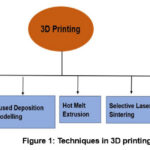 |
Figure 1: Techniques in 3D printing. |
Stereolithography
SLA is a pioneering 3D printing process that harnesses light in order to cure liquid resin, building objects sequential layering, resulting in exceptionally detailed and complex geometries with high resolution and accuracy.14 Dr. Hideo Kodama, a trailblazing Japanese scientist, made a groundbreaking discovery by introducing the layered approach to SLA, harnessing UV light to solidify photosensitive polymers. This innovation marked a substantial milestone in the evolution of additive manufacturing, enabling the crafting of geometric patterns with unprecedented precision. Research began in the 1970s, but Charles (Chuck) Hull developed the terminology and patent-protected process in 1986. He subsequently launched 3D Systems Corporation to monetize his patented technology. Stereolithography [SLA] differs uniquely from other 3D printing technologies due to its exceptional resolution and ability to avoid thermal processes, making it an ideal choice for printing sensitive drug molecules and delicate pharmaceuticals.15 SLA 3D-printers are known to achieve a high speed of up to 700mm/hr. SLA 3D-printing is is so exact, flexible, and creates flat surfaces, it’s perfect for dental implants, medical models, and other things that would be expensive to machine.
Material Jetting
Material Jetting [MJ], a cutting-edge additive manufacturing technique, goes by several names, including Drop on Demand [DOD] and PolyJet modelling. Through jetting materials in a drop-on-demand fashion, MJ allows for the generation of complex forms and geometries with high precision and specificity. It is considered one of the most futuristic and impressive methods available today. This method uses inkjet-like printheads to build 3D objects layer by layer. It is similar to 2D inkjet printing, but instead of ink, MJ uses liquid resin droplets that are solidified by using UV light. This technology boasts affordability, efficient processing speeds, and minimal waste generation. MJ technology enables direct writing of CAD information, allowing for efficient and precise material processing over large areas. Its minimal contamination feature ensures clean and accurate results, making it an ideal choice for various applications.16
Fused Deposition Modelling
Late in the eighties, S. Scott Crump created the groundbreaking Fused Deposition Modelling (FDM) technology, revolutionizing the additive manufacturing industry. Stratasys further developed and commercialized this groundbreaking technology in 1990, transforming the way objects are designed and produced. FDM holds a prominent position in the nozzle-based printing category. It is distinguished by its utilization of thermoplastic polymers, which are fed through a preheated printing head, melted, and then dispensed through a nozzle with a precisely defined diameter, enabling the creation of objects. As the molten polymers come into contact with the cool printing surface, they rapidly solidify, layer by layer, cumulatively building the desired three-dimensional shape with precision and accuracy. Another name for this method is fused filament [FF] in the manuscripts. Utilizing fused filament methodology, 3D printing technology can efficiently produce personalized medicine products locally or at home, streamlining accessibility.17 In recent years, the adoption of these techniques has accelerated in the medicinal sector, enabling the development of cutting-edge therapeutic delivery systems, including hydrogels and coated solid dosage forms, which are transforming the landscape of pharmaceutical research and development.
This 3D printing technique for pharmaceuticals faces limitations due to unsuitable polymers, slow drug release, and additives.18
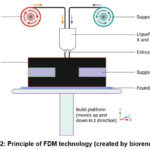 |
Figure 2: Principle of FDM technology (created by biorender). |
Hot Melt Extrusion
This method is a building process that relies on heat and pressure to liquefy and extrude a polymer through a small opening, creating a desired shape or form. It is an ongoing procedure that produces a uniform and homogenous product by melting and combining polymers using a revolving screw at temperatures higher than their glass transition point. Hot Melt Extrusion provides a solvent-free processing method, bypassing the complexities of solvent selection and ensuring an environmentally benign manufacturing process.19
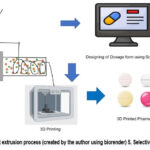 |
Figure 3: Hot melt extrusion process (created by the author using biorender) 5. Selective Laser Sintering. |
Dr. Joe Beaman, a renowned expert in additive manufacturing, successfully developed and patented Selective Laser Sintering technology at the University of Texas, significantly advancing the field of 3D printing. SLS incorporates a laser to fuse powdered material, typically metal, by precisely targeting the laser beam to designated areas in 3D space, as guided by a digital model, yielding a robust and rigid structure. SLS is employed in the fabrication of synthetic tissue. SLS has evolved beyond its early beginnings and is now a staple in industrial manufacturing, enabling the fabrication of plastic, metal, and ceramic objects with high precision and speed, catering to various industries and applications. Paracetamol, a commonly used pain reliever, has been successfully formulated into an orodispersible tablet using the Selective Laser Sintering (SLS) method, allowing for rapid dissolution and absorption.20
Laminated Object Manufacturing
Helisys Inc. developed this cutting-edge 3D printing technology. This technique utilizes the adhesive-coated layers of various materials, including paper, plastic, and metal, which are successively bonded and then precisely cut with a laser or knife to form a complex geometry or shape, one layer at a time. This process is both additive and subtractive and is considered one of the fastest and most affordable ways to create 3D prototypes. This method is used for rapid tooling and pattern making.
Binder Jetting
Binder Jetting technology was originally pioneered in 1993 by Dr. Emanuel Sachs and his team at Massachusetts Institute of Technology [MIT], revolutionizing additive manufacturing with a groundbreaking process that uses a fluid binding medium to glue together granular materials, layer by layer. Binder Jetting technology has been referred to by multiple names, such as Zip Dose, Therefore, M-Printing, and S-Printing, reflecting its evolution and application in different fields.21 Binder Jetting involves jetting binder material from its printer head to adhere layers of powder, with excess powder supporting overhanging structures, enabling rapid creation of complex shapes layer by layer.
Software Used The 3D printing process utilizes a range of software, including CAD, slicing, and 3D modelling tools, to bring digital designs to life.
CAD Software
It is used for creating, manipulating, analysing, or optimizing a design. The 3D printer executes G-code commands to layer liquid, powder, or sheet materials, constructing a component from segmented CAD designs, which are combined and fused to produce the intended shape and configuration. This approach enables the production of virtually any shape or geometric design. Some examples of CAD software include Autodesk Fusion 360, AutoCAD, Tinker CAD, and Rhino3D.22
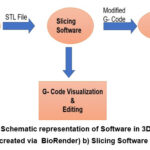 |
Figure 4: Schematic representation of Software in 3D printing (created via BioRender) b) Slicing Software. |
The Slicer software plays a crucial role in the Additive manufacturing process, transforming STL files into printable formats by generating printer-specific instructions for accurate and successful printing. The slicer software converts 3D models in STL format into printer-readable commands in G-code format, bridging the gap between design and printing. A variety of slicer applications are available, ranging from free and open-source options to commercial software. Some of the most popular slicer options include.23
3D-Model Creation Software
It is used for creating 3D models. The two most commonly used 3D model creation software are Blender and Sketch.
Blender: Free, open-source software that offers features like modelling, sculpting, rendering, and texturing.
SketchUp: Includes a large library of 3D components.
Table 3: 3D-printed pharmaceuticals
| Fabrication technique | Drug product | Dosage form |
| Stereolithography | ParacetamolIbuprofen | Tablet24Hydrogel |
| Fused deposition modelling | FelodipineDeflazacort
Rifampicin Prednisolone Indomethacin |
TabletNano capsules25
Dual-compartment Tablet Tablet Implant26 |
| Hot Melt Extrusion | Theophylline Domperidone | TabletTablet27 |
| Powder-Based Method | Warfarin | Tablet28 |
| Inkjet Printing | AcetaminophenFenofibrate
Rasagiline mesylate |
TabletTablet
Solid dosage form29 |
| Fused Filament Method | AripiprazoleFluorescein | TabletTablet |
| Pressure Assisted Syringe | GuaifenesinAspirin | Bilayer TabletPolypill tablet30 |
Motivations For 3D-Printing Medicines
Patients, pharmacists, clinicians, and the pharma sector can all benefit from 3D printing’s ability to personalize treatments in an automated and decentralized way.
Benefits to patients
The capacity to genuinely customize a treatment based on patient-centered care or unique needs is a significant advantage of 3D printing medications. In the future, patients might be asked to choose from a menu of formulations from a catalog, allowing them to choose features like physical attributes. This would improve medication adherence 7 and increase patient autonomy and engagement with treatment pathways. Treatment efficacy can be increased while lowering the possibility of side effects from incorrect dose by making it possible to produce medications with precise dosages or even flexible dosages of multiple drugs to make a 3D printed polyprintlet.
Paediatrics
Paediatric populations might benefit significantly from the capacity to create medications with customized dosage, flavour, physical attributes, for whom traditional mass-produced formulations would not be appropriate (for example, due to inferior palatability or inappropriate dosages). Numerous investigations have concentrated on employing 3D printing to create kid-friendly formulations, such as chewable and even chocolate-based formulations. 31,32
Studies have shown that polypharmacy can result in patient confusion and non-adherence, which can lead to dose errors; hence, 3D printing may be helpful for elderly populations or those on complicated administration regimens where medication polytherapy is widespread, resulting in a high tablet burden.
While traditional manufacturing methods are limited to fixed-dose combinations, 3D printing offers a promising solution for creating customized, multi-drug formulations with precise control over dosing and release profiles, which may improve medication adherence and reduce errors. A variety of technologies have been shown in a number of studies to produce polyprintlets. Researchers like Robles-Martinez et al. (2019) utilized SLA 3D printing to develop polyprintlets containing six medications in separate compartments, effectively consolidating six tablets into one, thereby reducing pill burden.33
Pharmaceutical industry
Leveraging 3D printing in pharmaceuticals can accelerate innovation and efficiency, starting from the early stages of drug development. It takes around 10 to 15 years from drug development to a marketable formulation. The recent COVID-19 pandemic makes it clear that there is a pressing need to reduce the time and cost of drug development to accelerate new drug discovery timeframes, necessitating quick drug development and repurposing trials.
On-demand manufacturing of specialized drugs could be evaluated using 3D printing as a rapid prototyping technique throughout pre-clinical and clinical formulation development. The evaluation of the effects of various medication formulations on important quality parameters (such medication performance in in vitro and in vivo models) may be accelerated by this fast prototyping. Numerous pre-clinical animal models have been used to test 3D printed compositions.34 Therefore, in contrast to time-consuming traditional manufacturing technologies, 3D printing may allow for an Initial grasp of formulation principles and process variables, which could lead to a quicker entry into first-in-human (FIH) clinical trials and a reduction in development time and expense. In order to assess safety and efficacy, 3D printing may also be used in foundational research phases to create specialized drugs of dose-flexible medication formulations as needed.
3D printing can be a viable alternative for the pharmaceutical industry to produce personalized medications in large quantities, catering to individual patient needs. From an economic standpoint, traditional manufacturing methods like tableting and encapsulation are likely to remain cost-effective for high-volume, low-complexity medications produced in centralized facilities. 3D printing offers significant potential for customizing medications to improve therapeutic outcomes. Similar to the existing use of 3D printing in creating personalized hearing aids, pharmaceuticals could be mass-customized at local production hubs to meet individual patient needs.34
Decentralized 3D printing in settings like pharmacies, clinics, or patient homes could enable on-demand medication production, reducing transportation costs, logistics expenses, and carbon emissions. This approach would also enable ambient storage conditions for temperature-sensitive medications.14
Advancements In 3D-Printing Technology
These 3D printed formulations offer programmed release of active ingredients and absorption, revolutionizing the field of pharmaceuticals. Advances in 3D-printing incorporate Process Analytical Technology [PAT] and Quality by Design [QBD] to assure consistent, high-quality outputs and optimize manufacturing processes. The efficiency of 3D printing processes can be enhanced through the implementation of advanced process control models for realtime optimization and Management of critical processing conditions. These models predict the intermediate states of raw materials processing and simulate material transfer. This technology takes 3D printing to the next level by enabling real-time control and monitoring. Regulatory agencies recognize the importance of mechanistic models for 3D printing process, enabling predictive insights into product performance across various diseases and patient populations. By leveraging 3D printing, the pharmaceutical industry can create more effective and safer products, enhancing patient care and outcomes.
Advantages
Increased productivity
Additive manufacturing revolutionizes the fabrication of prosthetics and implants, surpassing the traditional methods in speed, precision, accuracy, repeatability, and reliability. AM significantly boosts productivity by enabling rapid production of complex geometries and customized designs. With AM, prototypes can be created quickly, and production lead times are reduced, allowing for faster time-to-market. By optimizing the production process and reducing the need for specialized tooling, AM increases efficiency and productivity, making it an attractive option for industries that require complex, customized, or rapid production.35
Cost Effective
Traditional prototyping and production methods, such as injection moulding, require significant investments in tooling. However, 3D printing offers significant cost benefits, making it a highly cost-effective option for producing complex parts and products. By reducing the need for specialized tooling and molds, AM minimizes upfront costs and minimizes waste. Additionally, AM’s ability to produce customized designs without additional costs enables companies to create complex products without incurring significant expenses.36
Time Saving
3D-printing streamlines product development, slashing design-to-production timelines by reducing prototyping phases and accelerating the iteration and refinement. The technology eliminates the need for lengthy setup and tooling processes, allowing for faster iteration and production. By building parts layer by layer, 3D printing enables the production process, saving time and increasing efficiency.
Personalize The Medication
Customized implants, prosthetics, and surgical instruments enhance the treatment outcomes and patient comfort. Personalized surgical instruments aid in preoperative planning, allowing surgeons to practice and refine their techniques before the actual surgery. This can lead to improved surgical accuracy and efficiency, reducing the risk of complications and improving patient outcomes. By creating patient-specific devices, AM improves fit, function, and overall effectiveness of medical interventions.37
Build Your Imagination
Art and design have unleashed unprecedented creative possibilities, fuelled by 3D printing technology. This powerhouse combination enables visionaries to bring imagination to life and to convert dreams into functional innovations. With 3D printing, the possibilities are endless from intricate sculptures to complex architectural designs allowing creatives to turn their dreams into reality and inspire new generations of innovators.
Disadvantages
Limitations of size and shapes
Certain techniques can produce porous and irregularly shaped dosage forms potentially affecting their quality and release properties. This can be particularly problematic when working with thermostable drugs, as the irregular shape and porosity may impact the drug’s efficacy and safety. Researchers are working to overcome these limitations by optimizing printing parameters and developing new techniques that can produce more uniform and precise dosage forms.37
Intellectual Property Issues
The rapid reproduction of objects using 3D technology raises concerns about intellectual property [IP] rights, as it facilitates the easy creation of replicas, potentially infringing on patents, copyrights, and trademarks. Companies may struggle to protect their proprietary designs and trade secrets, as AM enables rapid replication and dissemination of sensitive information. This IP vulnerability can hinder innovation and investment in AM technologies, as companies may be hesitant to share their designs and risk losing control over their intellectual property.
Environmental And Health Concerns
Material wastage, emissions, and fumes are the major disadvantage of 3D printing. The 3D printing process poses environmental and health risks due to hazardous waste generation, toxic fume and particle emissions, and high energy consumption contributing to greenhouse gas emissions. To minimize these risks, it’s crucial to implement proper ventilation systems, enforce strict safety protocols, and develop effective waste management strategies.
Quality And Reliability
Layer adhesion issues, shrinkage, and material inconsistencies cause variability in printed material properties. Inconsistencies in printed material properties can impact product durability and functionality. To achieve reliable results, careful control of printing parameters, material selection, and additional processing steps is crucial to minimize these issues and ensure consistent quality.38
Texture and Finish
3D printing often struggles to achieve smooth surfaces or specific textures, resulting in layer lines or roughness. Post-processing techniques like sanding or coating are frequently necessary, adding time and cost to production. This limitation can impact the suitability of 3D printed parts for industries where surface finish is crucial.
Applications
In healthcare industry, it is used for personalized medication and pharmaceuticals that can be tailored to individual patient needs, improving treatment efficacy. Additionally, 3D printing enables the creation of customized dental implants, prosthetics, and surgical models that match patient anatomy, leading to better fit, function, and patient outcomes. This technology has revolutionized patient care, enabling more precise and effective treatments.39
In research and development, 3D printing plays a crucial role in accelerating innovation. It’s used for drug screening, testing, and optimizing drug formulations, allowing researchers to efficiently evaluate efficacy and safety. Additionally, 3D printing enables the development of novel excipients, facilitating the creation of new drug delivery systems and improving therapeutic outcomes.40
Supports the development of bioengineered organs, materials, and cell-based constructs by enabling precise control over structure and architecture. This technology facilitates advancements in regenerative medicine, and biomedical research, potentially revolutionizing organ transplantation and tissue repair 40.
3D printing can create scaffolds for tissue engineering applications, such as wound healing or regenerative medicine. These scaffolds provide a framework for cell growth and tissue regeneration, promoting the development of new tissue and facilitating the healing process.41
3D printing technology enables the emergence of drug-eluting implants that release medication directly to the target site, dimnishing systemic side effects. These implants can be designed to release specific doses of medication over a controlled period, providing localized treatment for conditions such as cancer, pain management, or infections.41
Challenges
Due to a number of obstacles, 3D printing is not becoming widely used in the industrial sector. The application of rapid prototyping for a range of manufactured products is being limited by the upfront cost of equipment, the cost of feedstock, and the lack of a competent labour. Apart from this, there are a number of problems that make the designers and material researchers not yet confident in the process, such as low dimensional accuracy and poor reliability of material characteristics. The usage of 3D printed parts for numerous crucial applications is also being restricted by the created parts’ low mechanical qualities and surface polish. These difficulties can be addressed, though, by researching how different process variables impact mechanical characteristics and gaining further knowledge about the procedure to make it more effective in creating goods with better qualities. Another issue with additive manufacturing is said to be the printing time. AM procedures are typically laborious and slow. Conventional manufacturing cannot be replaced by AM until the printing time is decreased. Although AM installations are expensive, this might not be an issue in a few years. Although the local market already offers small, customized 3D printers, the price is still prohibitive for large-scale industrial setups. The system is costly, but so are the basic ingredients, like filaments. Depending on the filament’s specifications, each 3D printer filament can cost anywhere between $25 and $50. One of the primary issues in the current situation is the anisotropy of structures made using additive manufacturing. This could lead to varied mechanical characteristics depending on the loading conditions. Because 3D printed products may show the successive layer printing from the side perspective, their appearance is not fine enough. In applications like scaffolds, this flaw might not matter, but in toys and structures where look is crucial, it is very essential.
Conclusion
This review paper provides an analysis of different 3D printing methods employed in the medicinal domain, exploring the fundamental key elements and features of each technique, the suitable formulations for each technique, and the historical enhancement and evolution of each technique. 3D printing enables the development of tailored pharmaceutical products with integrated flexibility, enhancing efficacy and safety in drug delivery systems. The regulatory framework for 3D-printed preparations is adapting to the emerging technology, with fresh approaches to registration, filing, and approval being implemented. Additionally, intellectual property rights, medical product regulations, and other guidelines are being redefined, paving the way for new developments in this innovative field. This review literature seeks to inform and guide researchers and professionals, serving as a reliable reference point for further studies and investigations. The future of 3D printing in pharmaceuticals holds vast possibilities, enabling innovative solutions that transform the way we approach drug development, production, and patient treatment.
Acknowledgment
The authors would like to thank Krishna Terja Pharmacy College, Tirupati, for their support of this research.
Funding Sources
The author(s) received no financial support for the research, authorship, and/or publication of this article Conflict of interest
The authors do not have any conflict of interest.
Data availability statement
This statement does not apply to this article.
Ethics Statement
This research did not involve human participants, animal subjects, or any material that requires ethical approval.
Informed Consent statement
This study did not involve human participants, and therefore, informed consent was not required.
Clinical Trial Registration
This research did not involve a clinical trial or animal subjects, and therefore, clinical trial registration was not required.
Permission to reproduce material from other sources
Not applicable.
Author’s Contribution
Yermanchi Sarah Sujitha: Information collection, idea development, Analysis
Gangu Naveena: Methodology
Yarase Charanya: Visualization, Expository writing, review, and editing
Chinnamalli Reddy Poorna Chandana: data collection, Supervision
Narasimha Golla: coordination,review, and editing
References
- Perez Mananes R, Rojo-Manaute J, Gil P. 3D surgical printing and pre-contoured plates for acetabular fractures. Journal of Elsevier. 2016.
- Palmara G, Frascella F, Roppolo I, Chiappone A, Chiado AJB. Functional 3D printing: Approaches and bio applications. Biosensors and Bioelectronics. 2021; 175:112849.
CrossRef - The Indian Express. 3D manufacturing policy: Target of 500 items by ‘25’. The Indian Express. 2022; February 25.
- Hsiao WK, Lorber B, Reitsamer H. 3D printing of oral drugs: A new reality or hype? Expert Opin Drug Deliv. 2018; 15:1-4.
CrossRef - Scoutaris N, Ross S, Douroumis D. Current trends on medical and pharmaceutical applications of inkjet printing technology. Pharm Res. 2016;33(8):1799-1816.
CrossRef - Wilsdon T, Edwards G, Lawlor R. The benefits of personalised medicine to patients, society and healthcare systems. EBE Biopharma. 2018.
- Gioumouxouzis CI, Tzimtzimis E, Katsamenis OL, et al. Fabrication of an osmotic 3D printed solid dosage form for controlled release of active pharmaceutical ingredients. Eur J Pharm Sci. 2020; 143:105176.
CrossRef - Huang J, Qin Q, Wang J. A review of stereolithography: Processes and systems. Processes. 2020;8(9):1138.
CrossRef - Robles Martinez P, Basit AW, Gaisford S. The history, developments and opportunities of stereolithography. In: Stereolithography. AAPS Adv Pharm Sci Ser. 2018; 31:55-79.
CrossRef - Kruth JP, Mercelis P, Van Vaerenbergh J, Froyen L, Rombouts M. Binding mechanisms in selective laser sintering and selective laser melting. Rapid Prototyping J. 2005;11(1):26-36.
CrossRef - Jabri FE, Ouballouch A, Lasri L, El Alaiji R. A review on selective laser sintering 3D printing technology for polymer materials. In: Proc CASICAM 2022. Springer Tracts Addit Manuf. 2023:63-71.
CrossRef - Yang Y, Xu Y, Wei S, et al. Oral preparations with tunable dissolution behaviour based on selective laser sintering technique. Int J Pharm. 2021; 593:120127.
CrossRef - Lin X, Fu H, Hou Z, et al. Three-dimensional printing of gastro-floating tablets using polyethylene glycol diacrylatebased photocurable printing material. Int J Pharm. 2021; 603:120674.
CrossRef - Xu X, Goyanes A, Trenfield SJ, et al. Stereolithography (SLA) 3D printing of a bladder device for intravesical drug delivery. Mater Sci Eng C. 2021; 120:111773.
CrossRef - Apparatus for production of three-dimensional objects by stereolithography. National Library of Medicine, National Center for Biotechnology Information. 2022.
- Reddy RDP, Sharma V. Additive manufacturing in drug delivery applications: A review. Int J Pharm. 2020; 589:119820.
CrossRef - Lee D, Miyoshi T, Takaya Y, Ha T. 3D microfabrication of photosensitive resin reinforced with ceramic nanoparticles using LCD micro stereolithography. J Laser Micro Nanoeng. 2006;1(2).
CrossRef - Maulvi FA, Shah MJ, Solanki BS, Patel AS, Soni TG, Shah DO. Application of 3D printing technology in the development of novel drug delivery systems. Int J Drug Dev Res. 2017;9(1):44-49.
- Singh M, Haverinen HM, Dhagat P, Jabbour GE. Inkjet printing process and its applications. Adv Mater. 2010;22(6):673-685.
CrossRef - Goyanes A, Buanz AB, Basit AW. Fused-filament 3D printing (3DP) for fabrication of tablets. Int J Pharm. 2014;476(1-2):88-92.
CrossRef - Prasad LK, Smyth H. 3D printing technologies for drug delivery: A review. Drug Dev Ind Pharm. 2016;42(7):10191031.
CrossRef - Basit AW, Gaisford S, eds. 3D Printing of Pharmaceuticals. Cham: Springer International Publishing; 2018. Vol. 31.
CrossRef - Herron J. 3D Model-Based Design: Setting the Definitions Straight. McCafé. 2010.
- Evans B. Practical 3D Printer: The Science and Art of 3D Printing. Apress; 2012. ISBN: 978-1-4302-4393-9.
- Martinez PR, Goyanes A, Basit AW, Gaisford S. Fabrication of drug-loaded hydrogels with stereolithographic 3D printing. Int J Pharm. 2017;532(1):313-317.
CrossRef - Skowyra J, Pietrzak K, Alhnan MA. Fabrication of extended-release patient-tailored prednisolone tablets via fused deposition modelling (FDM) 3D printing. Eur J Pharm Sci. 2015; 68:11-17.
CrossRef - Kyobula M, Adedeji A, Alexander MR, Saleh E, Wildman R, Ashcroft I, et al. 3D inkjet printing of tablets exploiting bespoke complex geometries for controlled and tuneable drug release. J Control Release. 2017; 261:207-215.
CrossRef - Khaled SA, Burley JC, Alexander MR, Roberts CJ. Desktop 3D printing of controlled release pharmaceutical bilayer tablets. Int J Pharm. 2014; 461:105-111.
CrossRef - Tagami T, Ito E, Kida R, et al. 3D printing of gummy drug formulations composed of gelatine and an HPMCbased hydrogel for paediatric use. Int J Pharm. 2021; 594:120118.
CrossRef - El Aita I, Rahman J, Breitkreutz J, et al. 3D-printing with precise layer-wise dose adjustments for paediatric use via pressure-assisted micro syringe printing. Eur J Pharm Biopharm. 2020; 157:59-65.
CrossRef - Ghanizadeh Tabriz A, Nandi U, Hurt AP, et al. 3D printed bilayer tablet with dual controlled drug release for tuberculosis treatment. Int J Pharm. 2021; 593:120147.
CrossRef - Goyanes A, Wang J, Buanz A, et al. 3D printing of medicines: Engineering novel oral devices with unique design and drug release characteristics. Mol Pharm. 2015; 12:4077-4084.
CrossRef - Goh WJ, Tan SX, Pastorin G, et al. 3D printing of four-in-one oral polypill with multiple release profiles for personalized delivery of caffeine and vitamin B analogues. Int J Pharm. 2021; 598:120360.
CrossRef - Seoane-Viano I, Trenfield SJ, Basit AW, et al. Translating 3D printed pharmaceuticals: From hype to real-world clinical applications. Adv Drug Deliv Rev. 2021; 174:553-575.
CrossRef - Goyanes A, Fernández-Ferreiro A, Majeed A, et al. PET/CT imaging of 3D printed devices in the gastrointestinal tract of rodents. Int J Pharm. 2018; 536:158-164.
CrossRef - Shin S, Kim TH, Jeong SW, et al. Development of a gastroretentive delivery system for acyclovir by 3D printing technology and it’s in vivo pharmacokinetic evaluation in Beagle dogs. PLoS ONE. 2019; 14: e0216875.
CrossRef - Ye M. The impact of 3D printing on the world container transport. TUDelft. 2015.
- Khaled SA, Burley JC, Alexander MR, Yang J, Roberts CJ. 3D printing of customized drug delivery systems. Int J Pharm. 2015; 494:643-650.
CrossRef - Musazzi UM, Selmin F, Ortenzi MA, Mohammed GK, Franze S, Minghetti P, et al. Personalized orodispersible films by hot melt ram extrusion 3D printing. Int J Pharm. 2018;551(1-2):52-59.
CrossRef - Sharma S, Chauhan A, Narasimhulu A. A review of recent developments on stereolithography. Int J Eng Res Technol. 2019;8(8):16-22.
- Pravin S, Sudhir A. Integration of 3D printing with dosage forms: A new perspective for modern healthcare. Biomed Pharmacother. 2018; 107:146-154.
CrossRef
 PlumX:
 Views: 2114 Views
  PDF Downloads:
1137
PDF Downloads:
1137 Accepted on: 03 Sep 2025
Second Review by: Dr. Manoj Kumar Prajapati
Final Approval by: Dr. Oscar Jaime Restrepo Baena