
Synthesis, Spectroscopic Properties of Nickel (II) Complex of the new Bis amide Ligand N, N?- alkanelid bis amide [Ni(NABA)]+
Department of Chemistry, Faculty of Science, Islamic Azad University, Malard Branch, Malard, Iran.
Download this article as:

We describe the synthesis and characterization of a new Nickel (II) complex of the bis amide ligand N, N’- alkanelid bis amide that abbreviated as NABA was synthesized and characterized. Ni (II) Metal complex of this bis amide ligand was prepared by reaction of chloride salt of Ni (II) with NABA. Characterization of the ligand was made by microanalyses, FT-IR,1HNMR and its complex was made by microanalyses, FT-IR and UV–Visible spectroscopy.
KEYWORDS:N; N’- alkanelid bis amide; Ni (II) complex; Synthesis; Spectroscopic properties
Introduction
Experimental
Material And Method
All reagents were supplied by Merck and were used without further purification. Melting point was determined in an Electrothermal 9200. The FT- IR spectra were recorded in the range 400–4000 cm-1 by KBr disk using a Bruker Tensor 27 M 420 FT-IR spectrophotometer. The UV–Vis spectra in CH3CN were recorded with a WPA bio Wave S2 100 spectrophotometer. Elemental CHN analyses were performed using a Heraeus CHN-O-RAPID elemental analyzer.
Synthesis Of The NABA Ligand
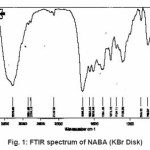
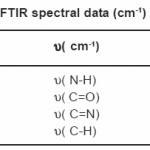
For synthesis of the NABA ligand, to a magnetically stirred of acetamide (1.13 g, 10mmol) in CH2Cl2 (10 ml) and hydrochloride acid (10ml) was added 4-methylbenzaldehyde (0.53g, 5mmol) via a syringe and heated for 4 h. After cooling to room temperature, the resulting white precipitate was filtered, washed with n-hexane (20 ml) and dried. M.P.: 235-237º C Yield: 89%. Anal. Calc. for C11H14N2O2: C, 64.07; H, 6.79; N, 13.59%. Found: C,64.18; H, 6.95; N, 13.83%. IR (KBr Disk, cm-1): 3279(w, N-H), 3111(w, C=O); 1381 (w, C=N); 690(s,C-H). (Figure1, 2, Table 1).
Figure 1: FTIR spectrum of NABA (KBr Disk)
 Click on image to enlarge |
Figure 2: 1H-NMRspectrum of NABA (in CDCl3)
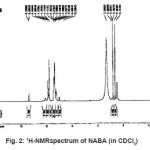
Table 1: FTIR spectral data (cm-1) of NABA
 Click on image to enlarge |
Preparation Of [Ni(Naba)]+ Complex
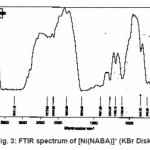
Figure 3: FTIR spectrum of [Ni(NABA)]+ (KBr Disk)
 Click on image to enlarge |
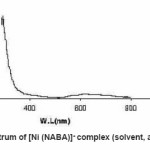
Figure 4: UV / Vis spectrum of [Ni (NABA)]+ complex (solvent, acetonitrile, 5×10⁻⁴ M)
 Click on image to enlarge |
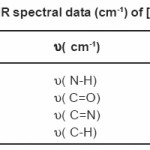
Table 2: FTIR spectral data (cm-1) of [Ni (NABA)]+
 Click on image to enlarge |
Results And Discussion
The nickel ion in nickel (II)-complexes exists in the coordination number of 4, 5 and 6 and octahedral, trigonal- bipyramidal, quadratic- pyramidal and tetrahedral complexes are paramagnetic and have in the majority of cases a green or blue color. The quadratic-planar nickel complexes are diamagnetic and mostly have a yellow, red or brown color.
The synthesis of nickel (II)-complexes passes over ligand substitution reactions where one or several ligands are replaced by other ones.These reactions are equilibrium reactions.
Essential for the building of a new complex is the complex building constant (stability constant). In all the following reactions a more basic ligand is removed by a lower basic one or a less dentate one by a more dentate one.
In this study we have reported the synthesis of a new bis amide derivative and it, s Ni(II) complex. The structural characterizations of synthesized compounds were made by using the elemental analysis, IR and UV spectral techniques. From the spectroscopic characterization, it is concluded that ligands acts as a neutral bidentate through the azomethine nitrogen atom and carbonyl groups.
Synthesis and Stability
Ni (II) salt reacts with Bis amide ligand in 1:1(L/M) molar ratio in solvent to afford complex. The ligand and its complex are stable at room temperature. These NABA ligand and (N, N’- alkanelid bis amide nickel (II) compound were obtained in relatively high yield, 89 and 91% respectively. These title compounds are soluble in solvents such as methanol, ethanol, acetonitrile, DMSO, acetone and chloroform, less soluble in in toluene and petroleum ether and in soluble in water, ether and hexane too. The strong band at 3279 is assigned to the N-H, 690 cm-1 is assigned to the C- H, 3111 cm-1 is assigned to the -C=O- and 1381 is assigned to -C=N- stretching vibrations compound in NABA ligand, 3241 cm-1 is assigned to the N-H, 1674 cm-1 is assigned to the C=O, 1274 cm-1 is assigned to the C=N, 590 cm-1 is assigned to the C- H in the complex. The electronic spectra of the synthesized compound, has been recorded by using the spectrometer in the range of 200-600 nm. The 1H-NMR spectra of NABA Ligand displays a signal at 7.4 ppm which is assigned to protons of benzen’s beta, one signal at 8.8 ppm which is assigned to protons of a-pyridil ring and a signal at 7.6ppm which is assigned to protons of C=O.
References
- Jeeworth T., Wah H. L. K., Bhowon M. G., Ghoorhoo D., Babooram K. Synt. React. Inorg. Met-Org. Chem., 30: 1023 (2000).
- Dharmaraj N., Viswanalhamurthi P., Natarajan K. Trans. Met. Chem., 26: 105 (2001).
CrossRef - Yildiz M., Dulger B., Dulger S.-Y., Koyuncu B.-M. J. Indian Chem. Soc., 81: 7 (2004).
- Lipscomb W.-N., Strater N. Chem. Rev. 96: 2375(1996).
CrossRef - Cozzi P. G. Chem. Soc. Rev., 33: 410 (2004).
CrossRef - Vallee B.-L., Auld D.-S., Acc. Chem. Res. 26: 543 (1993).
CrossRef - Jayabalakrishnan C., Natarajan K. Synt. React. Inorg. Met-Org. Chem., 31: 983 (2001).
- Chandra S., Sangeetika J. Indian Chem., Soc. 81: 203 (2004).
- Maiti A., Ghosh S. Indian J. Chem., 28: 980 (1989).
- Aggarwal R. C., Singh N. K., Singh R. P. Inorg. Chim. Acta., 29: 2794 (1981).
CrossRef - Sun X.-X., Qi C.-M., Ma S.-L., Huang H.-B., Zhu W.-X. Liu Y.-C. Inorg.Chem.Commu. 9: 911(2006).
CrossRef
Accepted on: 15 Apr 2012