
Green and Rapid Approach for the Synthesis of ZnO Nanoparticles with Photocatalytic and Antibacterial Studies
 , Neelam and Devendra Kumar*
 Download this article as:
ABSTRACT:This research focuses on creating a more effective and dependable approach for generating zinc oxide nanoparticles from eco-friendly green tea (Camellia sinensis) leaf extract using a microwave synthesizer. Optical properties were studied using UV–Visible diffuse reflectance spectroscopy while HR-TEM indicates size reduction. Scanning Electron Microscopy-Energy Dispersive X-ray confirmed the formation of hexagonal rod-like morphology of nanoparticles, while EDAX results provided the chemical composition of the NPs. X-Ray Diffraction results indicated that ZnO nanoparticles showed sizes ranging from 7.56-35.67 nm, which are in good agreement with HRTEM results. Their antibacterial property was evaluated in vitro against Escherichia coli and Klebsiella pneumoniae using the disk diffusion method, revealing strong inhibitory effects. In addition, ZnO nanoparticles demonstrated excellent UV-induced photocatalytic degradation of methylene blue, achieving 97% degradation within 70 minutes. Kinetic analysis revealed that the degradation process closely followed the pseudo-first-order model, highlighting the potential of ZnO as an environmentally benign catalyst for dye wastewater remediation.
KEYWORDS:Antibacterial activity; Eco-friendly; Microwave synthesis; Photocatalytic study; ZnO nanoparticles
Introduction
In recent times, nanotechnology has become a vital area of research within materials science, which offers the potential for creating new materials or devices at the nanoscale that can be applied across a variety of industries which in turn may enhance human life in aerospace, electronics, environmental cleanup, and healthcare1. The green synthesis approach of these nanoparticles protects the environment by creating chemical processes that avoid pollution rather than treating it afterwards. Also, this approach is both economically viable and beneficial2 which urges industries to use appropriate starting materials and conditions to prevent the formation of harmful by-products. This field is also called “Sustainable Chemistry,” “Benign Chemistry,” or “Clean Chemistry”3. Metal oxide nanoparticles are effective in inhibiting bacterial growth and addressing antibacterial resistance4,5. They are especially advantageous as antimicrobial agents because they are durable, highly stable, and exhibit relatively low toxicity to mammalian cells compared with organic nanoparticles6. Eco-friendly nanoparticle synthesis uses a plant-based approach with natural, nontoxic materials. Plant parts contain polyphenols, flavonoids, and tannins that act as reducing and stabilising agents during nanoparticle synthesis7. Recently, microwave-assisted synthesis has been widely used to prepare oxide, hydroxide, and sulphide nanoparticles. This method is environmentally friendly, simple, efficient, and avoids issues with thermal gradients8,9. Zinc oxide nanoparticles (ZnO NPs) are widely studied metal oxides because of their versatile, tunable properties. Their multifunctional behaviour enables applications in electronics, optoelectronics, and cosmetics. ZnO NPs have a high exciton binding energy and a wide direct band gap of about 60 meV and 3.37 eV, making them suitable for devices such as transistors, semiconductor diodes, and UV photodetectors10,11,12. The green synthesis of ZnO nanoparticles using biological extracts has gained popularity as an environmentally friendly, economical, and sustainable approach. Studies using extracts from orange peel13, Pelargonium odoratissimum14, Punica granatum15, and Elettaria cardamomum16 have shown that biosynthesised ZnO nanoparticles have notable photocatalytic and antibacterial activities. Enhanced photocatalytic performance is linked to increased surface area, defect-mediated charge separation, and improved generation of reactive oxygen species. However, finding rapid and sustainable synthesis methods with efficient multifunctional properties remains a research focus. This study employs microwave-assisted green synthesis using Camellia sinensis leaf extract to rapidly fabricate ZnO nanoparticles. The combined use of microwave irradiation and green tea phytochemicals allows for a simple, eco-friendly, and time-efficient synthesis. This approach also enhances the photocatalytic and antibacterial properties of ZnO nanoparticles, which is the main novelty of this work. In this study, ZnO NPs were synthesised with a microwave-assisted approach using tea extract as a green reducing agent. Nanoparticle characterisation was performed using UV-DRS, HR-TEM, P-XRD, and FESEM–EDX. The antibacterial and photodegradation efficiency of the nanoparticles was then systematically studied.
Materials and Methods
Chemicals
Zinc acetate dihydrate, Sodium hydroxide and solvents employed in the experimental work were of Analytical Grade, acquired from Sigma-Aldrich.
Extraction of Tea plant leaves
Commercial Lipton green tea (Camellia sinensis) leaves functioned as an eco-friendly capping and reducing agent. A mixture containing 10 g of tea leaves and 100 mL of distilled water was heated gently for 30 minutes, followed by cooling to ambient temperature. Further, the extract was filtered through filter paper (Whatman No.1), producing a clear filtrate rich in flavonoids and polyphenols that serve as natural stabilizers and reducers during nanoparticle formation.
Green and Efficient Synthesis of Zinc Oxide NPs
1.09 g of zinc acetate dihydrate was dissolved in 20 ml of deionized water in a 100 ml R.B. flask. While stirring continuously, 20 mL of prepared green tea extract was slowly introduced to form a homogeneous mixture. Subsequently, the pH of the reaction mixture was adjusted to 10 using NaOH solution (1.8g in 20 ml distilled water), which was added dropwise over 15 min using a microwave synthesizer operated at 110 W, maintaining the temperature at 60° C. The resultant white precipitate was extracted via centrifugation at 8000 rpm for 10 min, which was then rinsed properly with distilled water and subsequently dried at ambient temperature. Further drying process was carried out with the resultant powder by using a vacuum desiccator containing anhydrous CaCl2, and finally heat-treated at 120°C for 2 h.
Photocatalytic Studies
Methylene blue (MB) dye was used to test the photocatalytic efficiency of the ZnO nanoparticles. Photocatalytic reaction was carried out in a homemade photoreactor, using an Osram (250 W) high-pressure mercury lamp as our primary source of UV radiation. The reactor consists of a beaker and a magnetic stirring and the radiation source is positioned above the beaker. Stock solution of 10 ppm Methylene blue (MB) dye in 400 ml was prepared. After this 100 mg ZnO NPs as catalyst was agitate continuously with 100 ml stock solution of MB for 30 min in order to obtain proper homogeneity of the mixture as well as to reach the adsorption-desorption equilibrium. After stirring in the dark the concentration of sample (5 mL) extracted from the reaction medium was removed using a syringe and centrifuged. Subsequently, the ZnO NPs and MB dye reaction mixture was irradiated with UV light, and the progressive decline in the MB dye absorbance (A) was checked over time every ten minutes. Finally, the absorbance measurement at the λmax of 664 nm wavelength was carried out by using degraded solution. The photocatalytic degradation and rate of degradation of MB solution was estimated by using equation (a) and (b) respectively17,18.

Where A0 and A represent the MB solution’s initial and final-irradiation absorbance at 664 nm, which was determined by the UV-Visible spectrophotometer, while k is the reduction reaction’s rate constant.
Antibacterial Studies
Antibacterial efficiency of the prepared nanoparticles was evaluated by using the disk diffusion procedure versus two gram negative bacterial strains, Klebsiella pneumoniae and Escherichia coli19. The experiments were performed in triplicate at concentrations of 3.12–50 µg/ml, with amikacin serving as the standard drug. The culture medium was first sterilized through moist heat sterilization in an autoclave at 121 °C for approximately 30 minutes under 15 psi pressure. After that, dispense the sterilized medium into a Petri dish and allow it to solidify. Once solidified, a sterile cotton swab soaked in the bacterial culture broth was used to uniformly spread the bacteria across each plate’s surface, followed by incubation for 24 hours at 37 °C. After incubation, sterile discs (6 mm in diameter) were placed at various positions on the agar surface. Varied concentrations of ZnO NPs (3.12, 6.25, 12.5, 25, and 50 µg/mL) and a standard antibiotic (Amikacin, 3.12 µg/mL) were prepared in ethanol. From each solution, 20 µL was carefully dispensed onto individual sterile discs using a micropipette, followed by a subsequent incubation for 24 hours at 37°C. Post incubation, the diameter of the zone of inhibition (measured in mm) was used to evaluate the antibacterial activity.
Characterization Techniques
Optical properties and defect information were studied using UV–Visible diffuse reflectance spectroscopy (UV-DRS 2600, Shimadzu).The XPERT-PRO x-ray diffractometer (with Cu Kα radiation) in a θ–2θ configuration, handled at 45kV and 40 milliampere voltage and current correspondingly, was employed for the P-XRD analysis. Meanwhile, JOEL model JEM 2100 functioning at an accelerating voltage of 200kV, with a resolution point and lattice of 0.23 nm and 0.14 respectively, was utilized for Transmission Electron Microscopic studies. Further, the morphology and elemental composition of nanoparticles were identified by FESEM and EDX spectrometry model Quanta FEG250 with Image analyzer respectively.
Results
UV Diffuse Reflectance Analysis
A tauc plot from the UV-DRS spectroscopy data was used to estimate the optical band gap. The procedure of estimating the optical band gap is via fitting the experimentally determined absorption coefficient to the Tauc equation (1):

Where hυ is the photon energy, A is a constant, and n depends on the electronic transition type and n is Tauc exponent. UV-Visible diffuse reflectance studies (Fig.1(a) showed an absorption band at around 375 nm while the calculated band gap (Eg) values were found to be 3.25 eV (Fig.1(b). A wider band gap indicates the development of smaller nanoparticles; however, this spatial confinement also restricts the freedom of electron movement. These results suggest that the ZnO NPs superior electrical conductivity is a primary factor driving its enhanced photocatalytic performance20.
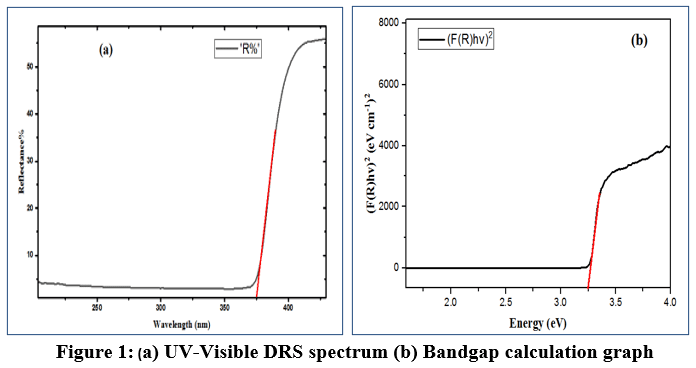 |
Figure 1: (a) UV-Visible DRS spectrum (b) Bandgap calculation graph Click here to View Figure |
P-XRD Study
P-XRD was employed to specify the structure of the synthesized ZnO NPs. P-XRD pattern confirmed that the particles had strong crystallinity in structure, as indicated by strong and intense diffraction peaks. The characteristic peaks observed at 2θ values = 31.7°- 69.0° (Fig.2) can be indexed to the characteristic lattice crystal facets of the hexagonal wurtzite ZnO, consistent with the standard data (JCPDS No. 36-1451) 21,22. The P-XRD graph is devoid of any additional peaks associated with impurities such as Zn, Zn (OH)2, or ZnCO3, clearly indicating the purity of the prepared nanoparticles. The (101) reflection appears as the dominant peak, indicating preferential crystal growth along this plane, in agreement with earlier studies23. Further, the crystallite size distribution was determined by utilizing the full width at half maxima (FWHM) of the diffraction peaks. It was found that broader peaks correspond to a smaller crystal size, verifying the nanosized features of the synthesized particles. The mean crystallite size was evaluated by employing the Debye–Scherrer equation (c)24.

Where D is the average crystallite size perpendicular to the reflecting plane, X-ray wavelength (Cu Kα = 1.5406 Å) and the shape factor (0.9) is denoted by λ and k respectively, whereas θ and β are the Bragg’s angle and FWHM of the diffraction peak respectively.
Applying the above to various diffraction peaks yielded crystallite sizes of 7.56 nm to 35.67, with a mean size of approximately 20.4 nm. These results confirmed that the synthesized ZnO NPs were pure, highly crystalline, and nanometer-sized, exhibiting the hexagonal wurtzite phase typical of ZnO NPs. On the basis of observed results, the crystallite structure of ZnO NPs was estimated by employing equation (d)25.

Where the Miller indices are denoted by h, k, and l; the lattice constant is represented by a and c, while the interplanar spacing is indicated by d. The estimated lattice parameters for ZnO NPs are detailed in Table 1.
Table 1: Estimated Crystallite sizes, lattice parameters by using XRD data
| Sample Name | a(Å)
a=b (100) |
c(Å)
(002) |
c/a | 2θ | FWHM (β) | D (nm) |
| ZnO | 3.2539 | 5.2170 | 1.6033 | 31.57 | 0.3425 | 25.1 |
| 34.27 | 0.2216 | 39.2 | ||||
| 36.10 | 0.4071 | 21.4 | ||||
| 47.47 | 0.7301 | 12.2 | ||||
| 62.77 | 0.5251 | 18.5 | ||||
| 67.88 | 0.4760 | 21.0 | ||||
| 69.03 | 0.5278 | 19.0 | ||||
| 77.06 | 1.5495 | 6.8 | ||||
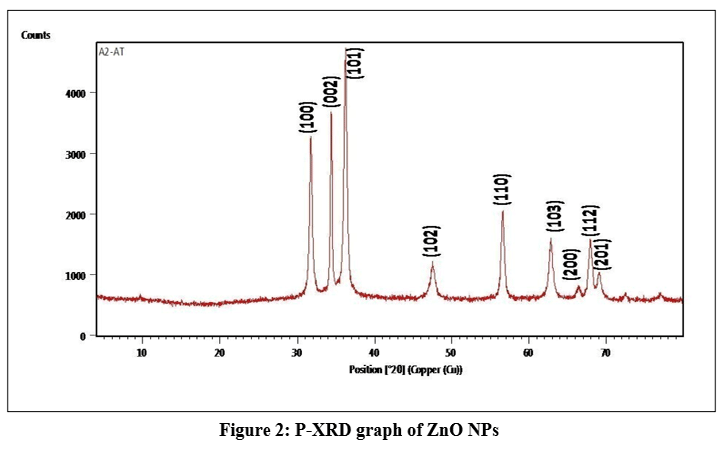 |
Figure 2: P-XRD graph of ZnO NPs Click here to View Figure |
FESEM and EDX analysis
FESEM micrograph of ZnO NPs revealed that most of the particles were hexagonal and rod-shaped, indicating a well-defined crystalline morphology (refer to Fig.3a,b). This observation confirms the uniformity and anisotropic growth of the ZnO NPs, consistent with their wurtzite hexagonal structure, as supported by XRD analysis. The corresponding EDX spectrum of the nanoparticles exhibited a strong signal at approximately 8.63 keV, which corresponds to the characteristic X-ray emission of metallic zinc, and a distinct oxygen peak at around 0.5 keV, confirming the presence of oxygen in the ZnO lattice (Fig.3c). The unavailability of any additional peaks indicates that the prepared nanoparticles are highly pure and stoichiometric ZnO without noticeable impurities26,27.
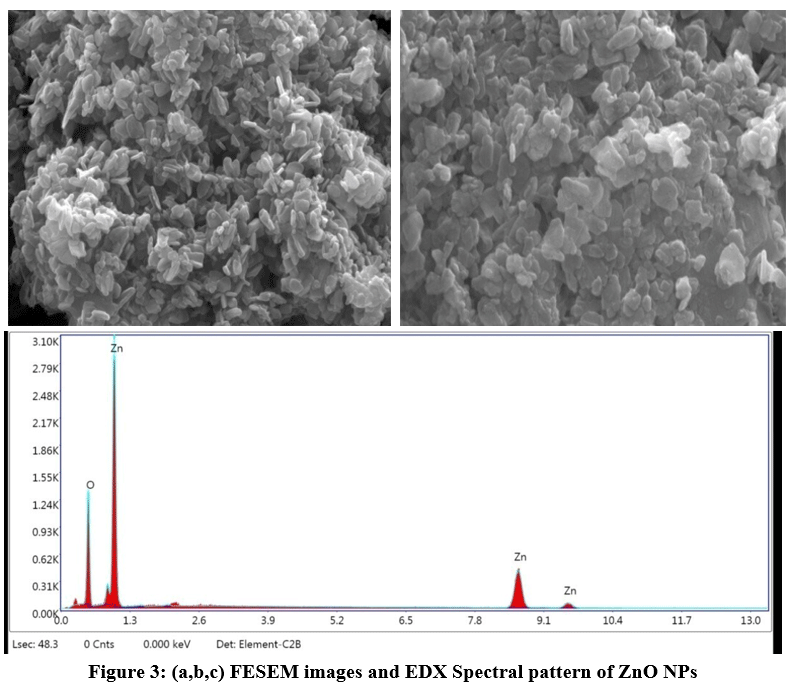 |
Figure 3: (a,b,c) FESEM images and EDX Spectral pattern of ZnO NPs Click here to View Figure |
HR-TEM Studies
The HR-TEM micrograph of synthesized ZnO NPs revealed that the size of ZnO NPs falls within 5.01 to 40.46 nm, with an average particle size of 21.73 nm. HR-TEM images of ZnO NPs indicated a hexagonal shape [Fig.4a, b].
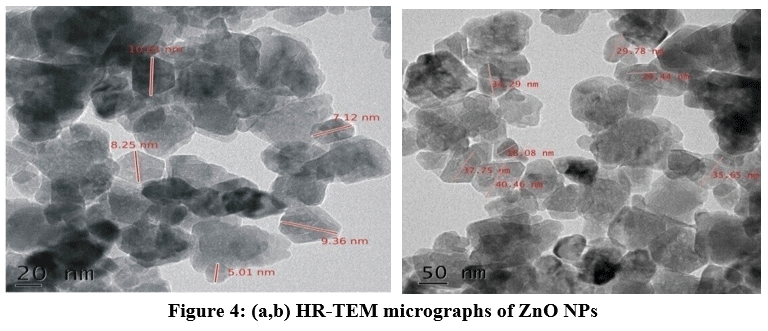 |
Figure 4: (a,b) HR-TEM micrographs of ZnO NPs Click here to View Figure |
Antibacterial Studies
The antibacterial activity of the synthesized ZnO nanoparticles (ZnO NPs) against Escherichia coli and Klebsiella pneumoniae was evaluated using the agar disc diffusion method (Fig.5a,b). As shown in Table 2, the ZnO NPs exhibited concentration-dependent antibacterial activity, with the inhibition zone increasing from 8.0 ± 0.20 to 20.0 ± 0.25 mm for E. coli and from 7.0 ± 0.30 to 17.5 ± 0.15 mm for K. pneumoniae as the concentration increased from 3.12 to 50 µg/mL. The maximum antibacterial activity was observed at 50 µg/mL, producing inhibition zones of 20.0 ± 0.25 mm and 17.5 ± 0.15 mm against E. coli and K. pneumoniae, respectively. Overall, E. coli exhibited slightly greater susceptibility to ZnO NPs than K. pneumoniae. The enhanced antibacterial activity of ZnO NPs may be attributed to the generation of reactive oxygen species (ROS), disruption of bacterial cell membranes, and the release of Zn²⁺ ions, which collectively inhibit bacterial growth and promote cell death.
Table 2: Maximal zone of inhibition by tested microbes
| S. No. | Test Concentration
(μg/ml) |
Escherichia coli
(zone of inhibition in mm) |
Klebsiella pneumoniae
(zone of inhibition in mm) |
| 1. | 50 | 20.0±0.25 | 17.5±0.15 |
| 2. | 25 | 17.2±0.20 | 16±0.40 |
| 3. | 12.5 | 14±0.15 | 15±0.45 |
| 4. | 6.25 | 13±0.11 | 12±0.36 |
| 5. | 3.12 | 8±0.20 | 7±0.30 |
| STD Amikacin | 3.12 | 12±0.20 | 8±0.20 |
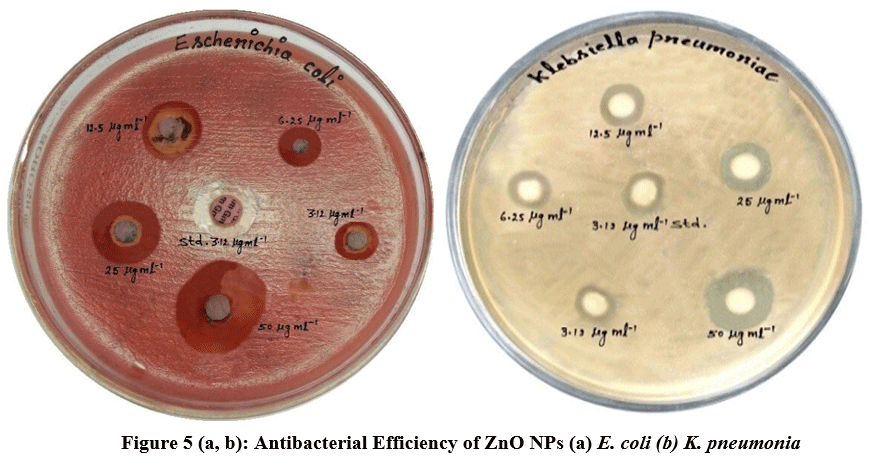 |
Figure 5: (a, b): Antibacterial Efficiency of ZnO NPs (a) E. coli (b) K. pneumonia Click here to View Figure |
Photocatalytic Performance Evaluation
The photocatalytic decomposition of methylene blue (MB) utilizing ZnO NPs was examined under UV light for 70 min, following a dark adsorption phase. Upon UV exposure, the absorbance at 664 nm decreased (Fig.6a) markedly with time, indicating efficient photo-induced degradation of MB17,18.
The percentage degradation increased (Fig.6b) sharply under UV illumination, achieving 90–97% removal within 70 min, while degradation in the dark remained below 5%. This enhanced activity arises from photon-induced excitation of ZnO, generating carrier pairs that initiate redox reactions. While conduction band electrons (e–{CB}) convert oxygen to superoxide radicals (·O2-), water or hydroxide ions undergo oxidation to hydroxyl radicals (·OH) via valence band holes (h+{VB}). These reactive oxygen species synergistically degrade MB into smaller inorganic products28, 29.
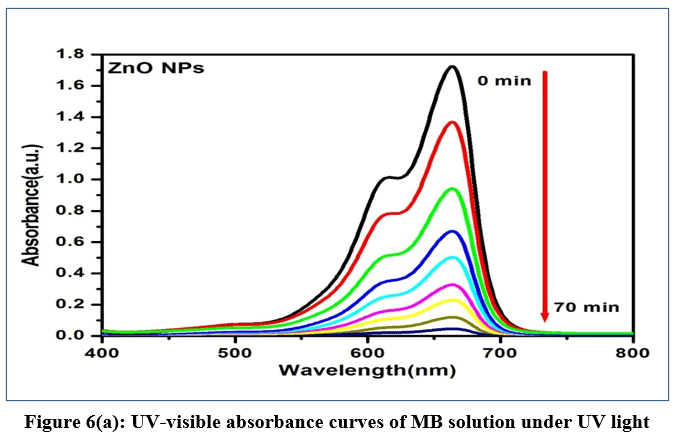 |
Figure 6(a); UV-visible absorbance curves of MB solution under UV light Click here to View Figure |
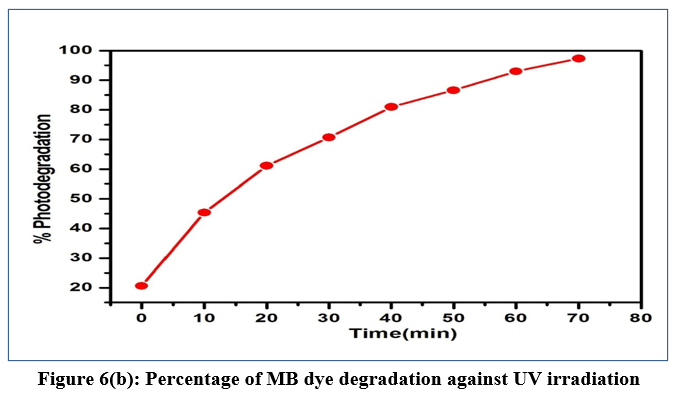 |
Figure 6(b): Percentage of MB dye degradation against UV irradiation Click here to View table |
The reaction kinetics followed the pseudo–first-order model (Fig.6c), expressed as equation (e):

The linear correlation (R² = 0.996) confirmed first-order behavior.
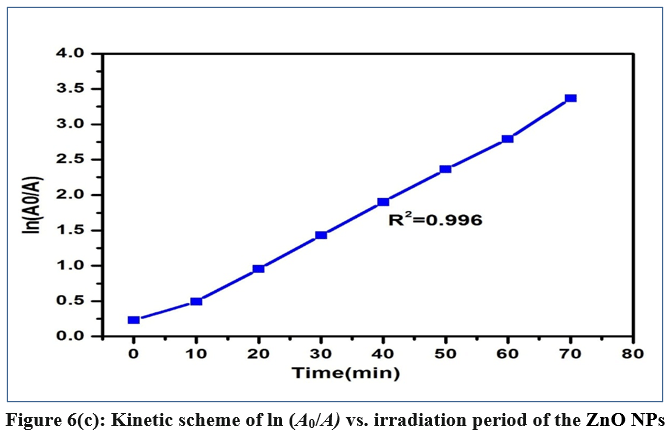 |
Figure 6(c): Kinetic scheme of ln (A0/A) vs. irradiation period of the ZnO NPs Click here to View Figure |
The noticeable rate constant was k = 0.0175 min-1 for ZnO under UV light. The negligible degradation in the dark further validates the photon-driven nature of the reaction, as shown in Table 3.
Table 3: Conditions under dark and light and their remarks
| Condition | % Degradation | K(min-1) | Remarks |
| Dark | ≤5% | — | 15 min |
| UV light | 97% | 0.0175 | 70 min |
Several plant-mediated approaches have been reported for the green synthesis of ZnO nanoparticles with photocatalytic applications. A comparative summary of previously reported studies and the present work is presented in Table 4.
Table 4: Comparative studies of different plants, dyes, photocatalytic efficiency and time of ZnO NPs
| Plant extract | Dye used | Photocatalytic efficiency | Time |
| Aloe vera31 | Methyl Orange | 95% | 140-160 min |
| Acalypha indica32 | Methylene blue | 96% | 90 min |
| Myristica fragrans33 | Methylene blue | 88% | 140 min |
| Brassica oleracea34 | Methylene blue | 74% | 180 min |
| Present Study (Camellia sinensis & Microwave assisted) | Methylene blue | 97% | 70 min |
As summarized in Table 4, previously reported green-synthesized ZnO nanoparticles exhibited significant photocatalytic degradation efficiency toward organic dyes. However, the present study employs a microwave-assisted green synthesis route using Camellia sinensis extract, which offers a rapid, eco-friendly, and efficient approach for the synthesis of ZnO nanoparticles with promising photocatalytic performance.
Discussions
The findings demonstrate that Camellia sinensis (green tea) leaf extract is an efficient natural source for the green synthesis of ZnO NPs by acting as both a capping and reducing agent. Optical properties successful showed by NPs as verified by using UV-DRS, while structural analysis revealed highly crystalline, nanosized ZnO with characteristic hexagonal morphology. The synthesized nanoparticles showed enhanced antibacterial and photocatalytic potential, mainly owing to their high surface reactivity, nanoscale dimensions, and capacity to generate reactive oxygen species. These results emphasize the value of plant-mediated synthesis as a sustainable and economical approach for developing multifunctional ZnO nanoparticles. The proposed mechanism (Fig.8) involves UV excitation of ZnO, followed by ROS generation (·OH and ·O2-), which oxidize MB to CO2, H2O, and ionic end-products35. These findings confirm ZnO’s high UV responsiveness and strong potential for wastewater dye removal.
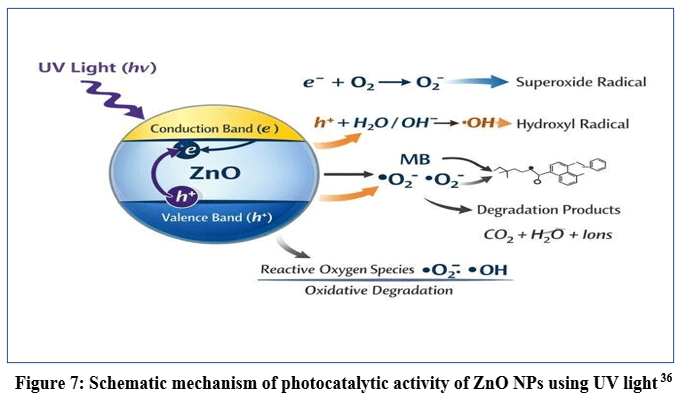 |
Figure 7: Schematic mechanism of photocatalytic activity of ZnO NPs using UV light 36 Click here to View Figure |
The antibacterial activity of ZnO nanoparticles (ZnO NPs) is predominantly associated with the generation of reactive oxygen species (ROS) and their subsequent interactions with microbial cells. ZnO, a wide-bandgap semiconductor (≈3.3 eV), undergoes photoexcitation upon absorption of photons with energy equal to or greater than its bandgap, resulting in the formation of electron–hole pairs. These charge carriers participate in a series of redox reactions that generate highly reactive species, including hydroxyl radicals (•OH), superoxide anions (O₂•⁻), hydroperoxyl radicals (HO₂•), and hydrogen peroxide (H₂O₂). The accumulation of these ROS induces oxidative stress, causing damage to cellular membranes, proteins, and nucleic acids, thereby disrupting vital metabolic processes such as protein synthesis and DNA replication. Furthermore, the formation of H₂O₂, which can readily diffuse across bacterial membranes, enhances antimicrobial efficacy by promoting intracellular oxidative damage, ultimately leading to cell death as shown in Fig.9 37,38,39. Variations in synthesis routes significantly affect the size and morphology of ZnO NPs, which in turn influence their antibacterial performance. Non-spherical nanostructures, including rod, wire, flower, hexagonal, and cuboidal shaped particles, often demonstrate enhanced bacterial activity owing to their greater interaction with penetration of bacterial cell wall40.
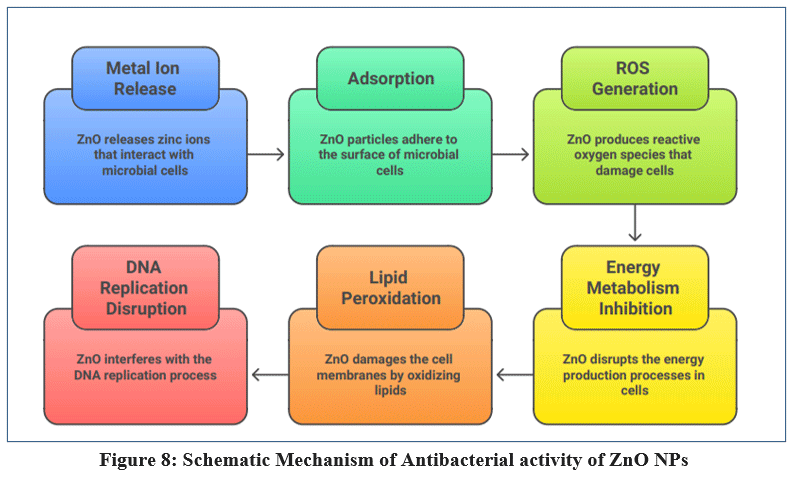 |
Figure 8: Schematic Mechanism of Antibacterial activity of ZnO NPs Click here to View Figure |
Conclusion
Plant-mediated microwave-assisted synthesis successfully produced highly crystalline, hexagonal, rod-shaped ZnO nanoparticles with an average size of ~22.8 nm, consistent with HRTEM analysis. The synthesized ZnO NPs exhibited significant antibacterial activity against E. coli and K. pneumoniae, demonstrating broad-spectrum antimicrobial efficacy. In addition, they achieved 90–97% degradation of methylene blue within 70 min under UV irradiation, following pseudo-first-order kinetics (k = 0.0175 min⁻¹). The enhanced photocatalytic performance was attributed to the generation of reactive oxygen species upon UV excitation. These findings highlight the potential of eco-friendly synthesized ZnO NPs as sustainable multifunctional materials for antimicrobial applications and wastewater remediation.
Acknowledgement
Authors are highly thankful to the Head of Department, Department of Chemistry, Dr. Bhimrao Ambedkar University, Agra for providing necessary facilities to conduct this work. Authors are also thankful to the Head Department of Microbiology, Khandari Campus, Agra for antibacterial activities.
Funding Sources
This work was supported by Uttar Pradesh State Government Project 89/2022/1585/seventy-4-2022/001-4-32-2022 dated 10-11-2022.
Conflict of Interest
The authors declare that they have no conflict of interest.
Data Availability Statement
This statement is not applicable to this article.
Ethics Statement
This research did not involve human participants, animals, or any materials requiring ethical approval.
Permission to Reproduce Material from Other Sources
Not applicable.
Author Contributions
- Akanksha Tiwari: Writing – review & editing, Formal analysis, Writing – original draft, Software, Resources, Methodology, Investigation, Data curation.
- Neelam: Writing – review & editing.
- Devendra Kumar: Visualization, Validation, Supervision, Resources, Project administration, Investigation, Funding acquisition, Conceptualization.
References
- Ahamed M, Akhtar MJ, Alhadlaq HA, Alrokayan SA Assessment of the lung toxicity of copper oxide nanoparticles: current status Nanomed 2015;10(15):2365-2377. https://doi.org/10.2217/nnm.15.72
CrossRef - Ravichandran S Green chemistry–a potential tool for chemical synthesis Int J Chem Tech Res 2010; 2(4):2188-2191.
- Anastas PT Green chemistry and the role of analytical methodology development Crit Rev Anal Chem 1999; 29(3): 167-175. https://doi.org/10.1080/10408349891199356
CrossRef - Thema FT, Manikandan E, Dhlamini MS, Maaza MJ green synthesis of ZnO nanoparticles via Agathosma betulina natural extract Mater Lett 2015;161: 124-127. https://doi.org/10.1016/j.matlet.2015.08.052
CrossRef - Kalusniak S, Sadofev S, Puls J, Henneberger F ZnCdO/ZnO–a new heterosystem for green‐wavelength semiconductor lasing Laser Photonics Rev 2009;3(3):233-242. https://doi.org/10.1002/lpor.200810040
CrossRef - Djurišić AB, Leung YH, Ng AM et al. Toxicity of metal oxide nanoparticles: mechanisms, characterization, and avoiding experimental artefacts Small 2015;11(1):26-44. https://doi.org/ 1002/smll.201303947
CrossRef - Hanna DH, Nady DS, Wasef MW, Fakhry MH, Mohamed FS, Isaac DM, et al. Plant-derived nanoparticles: Green synthesis, factors, and bioactivities. Next Mater. 2025;9:101275. https://doi.org/10.1016/j.nxmate.2025.101275
CrossRef - Horie M, Fujita K, Kato H et al. Association of the physical and chemical properties and the cytotoxicity of metal oxide nanoparticles: metal ion release, adsorption ability and specific surface area Metallomics 2012;4(4):350-360. https://doi.org/10.1039/c2mt20016c
CrossRef - Swartz JD, Deravi LF, Wright DW Bottom‐Up Synthesis of Biologically Active Multilayer Films Using Inkjet‐ Printed Templates Adv Funct Mater 2010;20(9):1488-1492. https://doi.org/10.1002/adfm.200902169
CrossRef - Munna N, Jamal MS, Rahim A, Islam MK, Shakil AR, Kamruzzaman M. Detailed crystallographic structure and optoelectrical properties of ZnO nanoparticles synthesized by simple precipitation method. Next Matter. 2025;9:100960. https://doi.org/10.1016/j.nxmate.2025.100960
CrossRef - Narayana A, Bhat SA, Fathima A, Lokesh SV, Surya SG, Yelamaggad CV. Green and low-cost synthesis of zinc oxide nanoparticles and their application in transistor-based carbon monoxide sensing. RSC Adv. 2020;10(23):13532-13542. https://doi.org/ 10.1039/D0RA00478B
CrossRef - Supin KK, PM PN, Vasundhara M. Enhanced photocatalytic activity in ZnO nanoparticles developed using novel Lepidagathis ananthapuramensis leaf extract. RSC Adv. 2023;13(3):1497-1515. https://doi.org/10.1039/D2RA06967A
CrossRef - Thi TUD, Nguyen TT, Thi YD, Thi KHT, Phan BT, Pham KN. Green synthesis of ZnO nanoparticles using orange fruit peel extract for antibacterial activities. RSC Adv. 2020;10(40):23899-23907. https://doi.org/10.1039/D0RA04926C
CrossRef - Abdelbaky AS, Abd El-Mageed TA, Babalghith AO, Selim S, Mohamed AM. Green synthesis and characterization of Pelargonium odoratissimum (L.) aqueous leaf extract and their antioxidant, antibacterial and anti-inflammatory activities. Antioxidants (Basel). 2022;11(8):1444. https://doi.org/10.3390/antiox11081444
CrossRef - Mousa SA, Wissa DA, Hassan HH, Ebnalwaled AA, Khairy SA. Enhanced photocatalytic activity of green synthesized zinc oxide nanoparticles using low-cost plant extracts. Sci Rep. 2024;14(1):16713. https://doi.org/10.1038/s41598-024-66975-1
CrossRef - Kaur H, Sharma A, Anand K, Panday A, Tagotra S, Kakran S, et al. Green synthesis of cardamomum and zinc nitrate precursor: a dual-functional material for water purification and antibacterial applications. RSC Adv. 2025;15(21):16742-16765.https://doi.org/10.1039/D5RA01469G
CrossRef - Ashaduzzaman M, Al Muhit MA, Dey SC, et al. Microwave assisted starch stabilized green synthesis of zinc oxide nanoparticles for antibacterial and photocatalytic applications SciRep 2025;15(1):28288. https://doi.org/10.1038/s41598-025-14193-8.
CrossRef - Ahammed KR, Ashaduzzaman M, Paul SC et al. Microwave assisted synthesis of zinc oxide (ZnO) nanoparticles in a noble approach: utilization for antibacterial and photocatalytic activity SN Appl Sci 2020;2(5):955.https://doi.org/10.1007/s42452-020-2762-8
CrossRef - Bauer AW, Kirby WM, Sherris JC, Turck M Antibiotic susceptibility testing by a standardized single disk method Am J Clin Pathol 1966;45(4_ts):493-496. https://doi.org/10.1093/ajcp/45.4_ts.493
CrossRef - Alharthi FA, Alghamdi AA, Alothman AA, Almarhoon ZM, Alsulaiman MF, Al-Zaqri N. Green synthesis of ZnO nanostructures using Salvadora Persica leaf extract: applications for photocatalytic degradation of methylene blue dye. Crystals. 2020;10(6):441. https://doi.org/10.3390/cryst10060441.
CrossRef - Singh G, Kumar V, Gaur J, Kumar S Sustainable Hydrothermal Route for ZnO Nanoparticles using Berseem extract: A Structure–Property Correlation Study ICCK Trans Adv Funct Mater Process 2025;1(2):68-77. https://www.icck.org/article/abs/tafmp.2025.399354
- Attaf R, Attaf N, Boujadar S, Abdelaziz O, Aida MS Co-precipitation synthesis of MgxZn(1-x)O nanoparticles and their antibacterial activity application Mater Sci Eng B 2026;325:119159. https://www.sciencedirect.com/science/article/pii/S0921510725011833
CrossRef - Vikal S, Gautam YK, Ambedkar AK et al. Structural, optical and antimicrobial properties of pure and Ag-doped ZnO nanostructures J Semicond 2022; 43(3):032802. https://doi.org/10.1016/j.jece.2022.109832
CrossRef - Grace MA, Rao KV, Anuradha K, Jayarani AJ, Rathika A X-ray analysis and size-strain plot of zinc oxide nanoparticles by Williamson-Hall Mater Today Proc 2023;2:1334-1339. https://doi.org/10.1016/j.jnpc.2025.01.005
CrossRef - Rajiv P, Rajeshwari S, Venckatesh R Bio-Fabrication of zinc oxide nanoparticles using leaf extract of Parthenium hysterophorus L. and its size-dependent antifungal activity against plant fungal pathogens Spectrochim Acta A Mol Biomol Spectrosc 2013;112:384-387. https://doi.org/10.1016/j.saa.2013.04.072
CrossRef - Kundu S, Sain S, Satpati B, Bhattacharyya SR, Pradhan SK Structural interpretation, growth mechanism and optical properties of ZnO nanorods synthesized by a simple wet chemical route RSC Adv 2015;5(29):23101-23113. https://doi.org/10.1039/C5RA01152C
CrossRef - Rajesh D, Lakshmi BV, Sunandana CS Two-step synthesis and characterization of ZnO nanoparticles Physica B: Condens Matter 2012;407(23):4537-4539.https://doi.org/1016/j.physb.2012.07.050
CrossRef - Mechi L, Chemingui H, Chékir J, Alsukaibi AK, Azaza H, Mhiri M Plant mediated green synthesis of zinc oxide nanoparticles for photocatalytic degradation of trypan blue: Optimisation via box-Behnken design Results Chem 2025;18:102822. https://doi.org/10.1016/j.rechem.2025.102822
CrossRef - Jia Z, Miao J, Lu HB, Habibi D, Zhang WC, Zhang LC Photocatalytic degradation and absorption kinetics of cibacron brilliant yellow 3G-P by nanosized ZnO catalyst under simulated solar light J Taiwan Inst Chem Eng 2016;60:267-274. https://doi.org/10.1016/j.jhazmat.2005.10.022
CrossRef - Sharma S, Kumar K, Thakur N, Chauhan S, Chauhan MS. The effect of shape and size of ZnO nanoparticles on their antimicrobial and photocatalytic activities: a green approach. Bull Mater Sci. 2020;43(1):20. https://doi.org/10.1007/s12034-019-1986-y
CrossRef - Kamarajan G, Anburaj DB, Porkalai V, Muthuvel A, Nedunchezhian G. Green synthesis of Acalypha indica leaf extract and their photocatalyst degradation and antibacterial activity. J Indian Chem Soc. 2022;99(10):100695. https://doi.org/10.1016/j.jics.2022.100695
CrossRef - Faisal S, Jan H, Shah SA, Shah S, Khan A, Akbar MT, et al. Green synthesis of zinc oxide (ZnO) nanoparticles using aqueous fruit extracts of Myristica fragrans: their characterizations and biological and environmental applications. ACS Omega. 2021;6(14):9709-9722. https://doi.org/10.1021/acsomega.1c00310
CrossRef - Osuntokun J, Onwudiwe DC, Ebenso EE. Green synthesis of aqueous Brassica oleracea var. italica and the photocatalytic activity. Green Chem Lett Rev. 2019;12(4):444-457. https://doi.org/10.1080/17518253.2019.1687761
CrossRef - Yakushova ND, Gubich IA, Karmanov AA, Komolov AS, Koroleva AV, Korotcenkov G Photocatalytic Degradation of Toxic Dyes on Cu and Al Co-Doped ZnO Nanostructured Films: A Comparative Study Technol 2025;13(7):277. https://doi.org/10.3390/technologies13070277
CrossRef - Chaudhari R, Adhale M, Bhapkar A et al. ZnO nanoparticles synthesis by sacrificial composite monolith method and enhanced photocatalytic degradation of methylene blue dye. Sustain Chem Environ 2025;10:100295. https://doi.org/10.1016/j.scenv.2025.100295
CrossRef - Kouhail M, Elberouhi K, Elahmadi Z, Benayada A, Gmouh S A Comparative study between TiO2 and ZnO photocatalysis: Photocatalytic degradation of textile dye. IOP Conf Ser: Mater Sci Eng 2020;827(1):012009. IOP Publishing. https://doi.org/10.1088/1757-899X/827/1/012009
CrossRef - Sawai J, Shoji S, Igarashi H, Hashimoto A, Kokugan T, Shimizu M, Kojima H. Hydrogen peroxide as an antibacterial factor in zinc oxide powder slurry. J Ferment Bioeng. 1998;86(5):521-522. https://doi.org/10.1016/S0922-338X(98)80165-7
CrossRef - Seven O, Dindar B, Aydemir S, Metin D, Ozinel MA, Icli S. Solar photocatalytic disinfection of a group of bacteria and fungi aqueous suspensions with TiO₂, ZnO and Sahara desert dust. J Photochem Photobiol A Chem. 2004;165(1-3):103-107. https://doi.org/10.1016/j.jphotochem.2004.03.005
CrossRef - Padmavathy N, Vijayaraghavan R. Enhanced bioactivity of ZnO nanoparticles—an antimicrobial study. Sci Technol Adv Mater. 2008;9(3):035004. https://doi.org/10.1088/1468-6996/9/3/035004
CrossRef - Mendes AR, Granadeiro CM, Leite A, Pereira E, Teixeira P, Poças F. Optimizing antimicrobial efficacy: Investigating the impact of zinc oxide nanoparticle shape and size. Nanomaterials (Basel). 2024;14(7):638. https://doi.org/ 10.3390/nano14070638
CrossRef
Abbreviations
ZnO- Zinc Oxide
XRD- X-ray diffraction
FESEM – Field emission scanning electron microscopy
EDX – Energy-dispersive X-ray spectroscopy
UV-DRS – UV-Diffuse Reflectance spectrometry
MB – Methylene blue
JCPDS – Joint Committee on Powder Diffraction Standards
FWHM – Full width at half maximum
HRTEM – High-resolution transmission electron microscopy
E. Coli. – Escherichia coli
K. pneumoniae- Klebsiella pneumonia
Accepted on: 25 Jun 2026
Second Review by: Dr. Sadeq Khoreem
Final Approval by: Dr Oscar Jaime Restrepo Baena